Best Yachting for Corporate Events: Definitive Superyacht & Charter Guide
Deploying a high-end marine platform for professional gatherings requires an intricate alignment of corporate branding, maritime law, safety compliance, and hospitality engineering. Moving far beyond traditional terrestrial boardrooms or hotel convention spaces, floating corporate venues introduce unique operational variables governed by international maritime conventions, coastal licensing restrictions, and strict passenger capacity limits. Corporate leadership evaluating the best yachting for corporate events must look past promotional imagery and aesthetic styling to examine how structural vessel configurations, liability distributions, and logistical infrastructure impact corporate governance and guest security.
The execution of a successful corporate deployment on the water is frequently underestimated by executive planners who treat maritime venues as mere floating extensions of standard hospitality facilities. In practice, hosting executive retreats, client entertainment evenings, or product launches requires navigating complex international safety management standards, specialized marine insurance riders, and strict territorial tax frameworks. Selecting an appropriate vessel and operational format ensures that the gathering protects brand reputation, maintains regulatory compliance, and delivers an uncompromised professional environment.
This analysis establishes an exhaustive technical and operational reference blueprint for evaluating corporate maritime events. By dissecting historical evolutions, mental models, structural variations, financial frameworks, and risk management taxonomies, this guide provides the profound depth required to navigate corporate marine hospitality with absolute clarity and professional authority.
Understanding “best yachting for corporate events.”
Investigating the structural mechanics that define the best yachting for corporate events requires dismantling the assumption that luxury vessel leasing is a uniform hospitality transaction. An elite corporate maritime program integrates professional event production, rigorous safety management systems, customized catering logistics, and discrete communication security into a cohesive shore-side and shipboard support structure. Whether applied to an executive board retreat aboard a 45-meter displacement motor yacht or a product launch hosting 150 VIP guests on a commercial passenger-certified mega-catamaran, the core objective is to achieve corporate objectives while mitigating liability exposure.
Common misunderstandings in this domain often center on regulatory passenger limits and commercial registration requirements. Corporate planners frequently assume that any large yacht can accommodate a large group of attendees, ignoring the strict legal distinction between private pleasure vessels and commercially certified passenger ships governed by national maritime authorities. Furthermore, some organizations view the selection of a maritime venue as an isolated marketing choice, failing to recognize that weather contingencies, port access permissions, and liability insurance exclusions can abruptly disrupt corporate schedules.
Oversimplifying these administrative and technical layers exposes corporations to severe operational friction, including Port State Control detainment, safety code violations, and public relations crises resulting from logistical failures. A comprehensive evaluation framework requires cross-referencing maritime safety codes, commercial contract terms, and specialized event logistics to ensure that the chosen vessel safeguards both brand equity and participant safety.
Deep Contextual Background
The evolution of corporate maritime hospitality reflects the broader convergence of high-end business networking, executive incentive structures, and the professionalization of the superyacht industry over the past century. Historically, corporate entertaining on the water was an informal practice restricted to industrial magnates hosting private guests aboard personal vessels. As global commerce expanded following the mid-twentieth century, multinational corporations recognized the unique psychological and relationship-building value of closed-door maritime environments for high-stakes negotiations and client retention.
The latter half of the twentieth century witnessed the formalization of commercial yacht charter contracts under standardized legal frameworks such as those established by the Mediterranean Yacht Brokers Association (MYBA) and the Baltic and International Maritime Council (BIMCO). Concurrently, the introduction of stringent international safety conventions—including the International Ship and Port Facility Security (ISPS) Code and national passenger vessel regulations—transformed corporate event execution from casual boat rentals into highly regulated commercial operations. Today, the sector operates at the intersection of corporate communications, luxury hospitality, and maritime law, requiring sophisticated planning to navigate tightening environmental regulations and complex international tax jurisdictions.
Conceptual Frameworks and Mental Models
Navigating and executing optimal strategies for corporate maritime events requires robust mental models that synthesize legal compliance, operational control, and strategic engagement objectives.
1. The Environmental-to-Acoustic Privacy Model
This mental model maps the physical layout of the vessel against the acoustic and visual privacy requirements of sensitive corporate discussions. It illustrates that board-level strategy sessions require dedicated interior bulkheads, sound-dampening architectural engineering, and secure satellite communication arrays that open-deck cocktail configurations cannot provide.
2. The Commercial Passenger Density Matrix
This framework evaluates the legal ratio between vessel gross tonnage, crew-to-guest ratios, and maximum certified passenger capacity. It weighs the desire for large-scale corporate entertaining against the rigid statutory limits imposed by flag-state maritime safety inspectors.
3. The Contingency-to-Itinerary Flexibility Curve
This mental model contrasts rigid corporate event schedules with weather-dependent maritime routing. It demonstrates how building administrative buffer time and alternative onshore fallback venues prevents operational paralysis when localized gales or port closures force sudden itinerary alterations.
Key Categories or Variations of Corporate Charter Formats
Categorizing the vast spectrum of corporate maritime deployments requires grouping plans by their scope of services, legal registration status, and primary business purpose. Participants evaluate these categories based on their strategic engagement goals and risk-mitigation thresholds.
-
Executive Board Retreats on Long-Range Motor Yachts: Intimate, highly secure multi-day voyages designed for executive leadership teams focusing on strategic planning. Trade-off: Maximum privacy, controlled environments, and high-level catering balanced by strictly limited guest capacities (usually 8 to 12 participants) and high baseline charter costs.
-
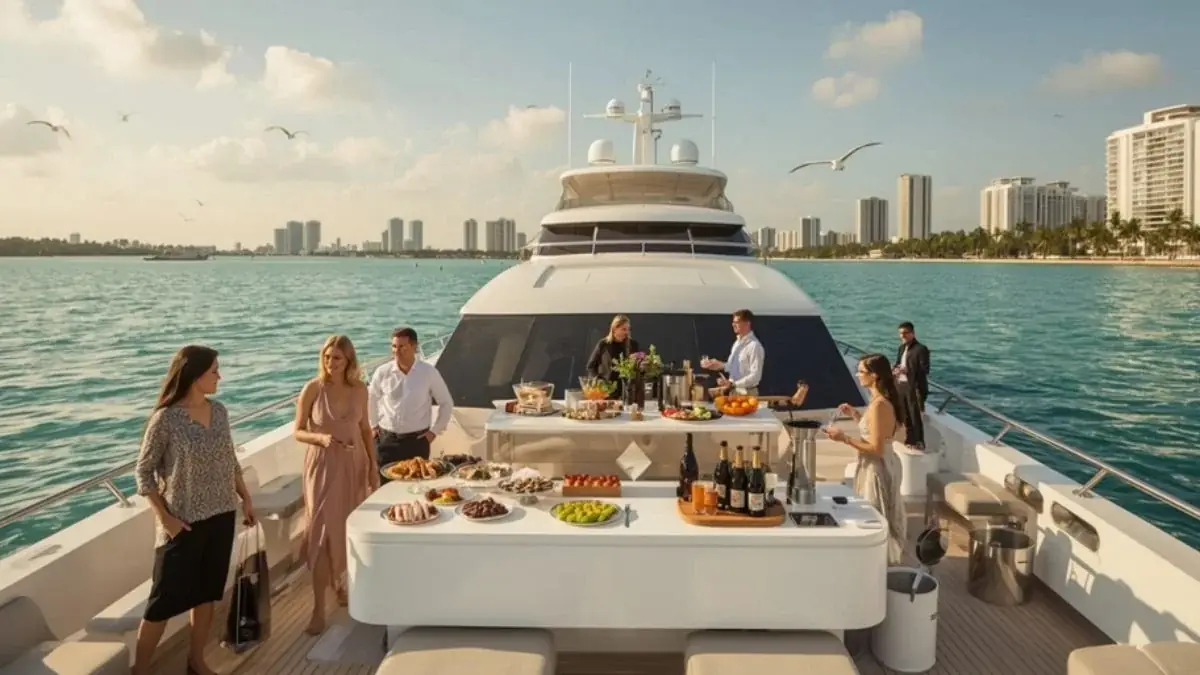
Large-Scale Client Entertainment and Cocktail Cruises: High-impact evening harbor events hosted on commercially certified passenger motor yachts or classic tall ships. Trade-off: Ability to host 50 to 200+ clients and stakeholders with impressive visual branding balanced by strict adherence to local coast guard passenger limits and reduced intimate conversation spaces.
-
Incentive Travel and Milestone Reward Charters: Week-long luxury cruising itineraries utilized to reward top-performing employees or key sales partners. Trade-off: Exceptional motivational impact and memorable team-building environments balanced by complex scheduling logistics and potential interpersonal friction among participants.
-
Product Launches and Media Showcase Charters: High-profile stationary or cruising events tailored for journalists, influencers, and brand ambassadors in major international ports. Trade-off: Maximum media visibility, custom branding integration, and curated presentation spaces balanced by intense logistical setup requirements and strict port berthing fees.
-
Team-Building Regattas and Sailing Fleet Challenges: Competitive sailing events utilizing matched fleets of production yachts for corporate groups. Trade-off: Active collaboration, problem-solving enhancement, and dynamic group engagement balanced by physical participation demands and weather dependency.
-
Port-Bound Static Hospitality Platforms (Event Docking): Utilizing a luxury superyacht as a stationary hospitality pavilion during major global events such as the Monaco Grand Prix or Cannes Film Festival. Trade-off: Unmatched networking access and prestigious corporate positioning balanced by exorbitant prime-berth rental tariffs and restricted mobility.
Comparison of Corporate Charter Formats
| Corporate Charter Format | Primary Business Objective | Typical Guest Capacity | Regulatory & Licensing Burden | Financial Cost Profile |
| Executive Board Retreat | Strategic planning and leadership alignment | 8 to 12 guests | Moderate (standard private or commercial charter rules) | Extremely high per-capita investment |
| Client Entertainment Cruise | Relationship building and brand hospitality | 30 to 150+ guests | High (strict commercial passenger vessel certification) | High flat fee plus heavy event provisioning |
| Incentive Travel Voyage | Employee reward and team cohesion | 10 to 24 guests | Moderate to High (multi-day cruising compliance) | Sustained weekly charter and APA commitment |
| Stationary Event Docking | VIP networking during global exhibitions | 50 to 200+ guests | High (temporary port permits, local event licensing) | Premium prime-berth tariffs plus vessel lease |
Realistic Decision Logic
When corporate leadership and event planners evaluate potential charter formats, selection must be anchored in the specific business objective, attendee count, and regulatory framework. If the objective is confidential executive strategy formulation, investing in a long-range motor yacht with private cabins and secure meeting infrastructure is essential. Conversely, if the corporate goal is large-scale brand activation and client entertainment during a major industry convention, securing a commercially certified passenger yacht or a stationary superyacht at a prime harbor berth provides the necessary scale and visibility.
Detailed Real-World Scenarios and Operational Dynamics

To understand how different corporate charter options perform under real-world operating conditions, consider four distinct operational scenarios.
Scenario A: The Confidential Executive Board Retreat
A multinational technology firm leases a 50-meter motor yacht in the Mediterranean to host a three-day strategic planning session for its executive board.
-
Constraints: Absolute digital and acoustic privacy requirements, zero tolerance for communication leaks, and high executive time value.
-
Decision Point: The corporate planner must verify that the yacht possesses encrypted satellite communication hardware and secure interior meeting spaces isolated from crew operational zones.
-
Failure Mode: Inadequate sound insulation or unencrypted onboard Wi-Fi exposes sensitive corporate strategy discussions to electronic interception or crew oversight.
-
Second-Order Effect: Because the management team selected a vessel equipped with dedicated boardroom facilities and secure enterprise networking, the retreat proceeds with flawless confidentiality, yielding a finalized corporate roadmap.
Scenario B: The Client Entertainment Cruise Weather Emergency
A financial services firm hosts 80 key clients on a commercially certified motor yacht for an evening harbor cruise in the North Atlantic.
-
Constraints: Strict corporate hospitality timeline, large crowd management, and an approaching unpredicted evening squall.
-
Decision Point: The captain must decide whether to proceed with the planned coastal dinner cruise or remain secured within the protected harbor basin.
-
Failure Mode: Pressured by corporate executives to maintain the itinerary, the captain ventures into choppy open water, inducing widespread seasickness among VIP clients and damaging the firm’s professional image.
-
Second-Order Effect: The captain exercises overriding safety authority to keep the vessel securely docked in the harbor, shifting the event into an indoor panoramic lounge environment while maintaining high guest satisfaction and absolute safety.
Scenario C: The Product Launch Port Clearance Delay
An automotive brand organizes a high-profile product showcase aboard a chartered superyacht docked in a major European port, inviting international media.
-
Constraints: Rigid media embargo schedules, complex customs clearance for promotional vehicles, and local port authority regulations.
-
Decision Point: The shore-side event producer must coordinate local customs officials and port agents to ensure all promotional assets are loaded prior to guest arrival.
-
Failure Mode: Administrative delays in local port paperwork prevent the promotional vehicle from being loaded onto the deck on time, disrupting the live press broadcast.
-
Second-Order Effect: The management team leverages its pre-established relationship with local port authorities to expedite emergency customs clearance, resolving the delay 30 minutes before press boarding commences.
Scenario D: The Incentive Travel Medical Evacuation
During a week-long incentive cruise in a remote island chain, a high-performing corporate executive suffers an acute medical emergency requiring immediate hospitalization.
-
Constraints: Remote geographic location, lack of advanced local medical facilities, and strict maritime safety protocol execution.
-
Decision Point: The captain and crew must coordinate an emergency evacuation plan with shore-side medical support networks and local coast guard units.
-
Failure Mode: Inadequate medical response planning or delayed communication with shore authorities results in a dangerous delay in patient care.
-
Second-Order Effect: The vessel’s pre-planned emergency medical evacuation protocol is activated instantly, utilizing the ship’s high-speed tender to transfer the patient to a pre-arranged helicopter rendezvous point, ensuring rapid medical intervention.
Planning, Cost, and Resource Allocation
Executing an effective corporate maritime event requires meticulous financial planning that accounts for base charter fees, variable event production costs, catering allowances, and specialized insurance riders.
Financial Dynamics and Cost Variability
| Planning Element | Estimated Financial Range | Primary Cost Driver | Financial Risk / Value Impact |
| Base Vessel Lease Fee | $20,000 to $400,000+ per day/week | Vessel size, shipyard pedigree, peak seasonal demand | Secures the core floating venue and basic crew infrastructure |
| Advanced Provisioning Allowance (APA) | 30% to 40% of base fee | Gourmet catering, premium beverage selections, fuel burn | Finances food, beverages, and dynamic operational costs |
| Corporate Event Production Surcharge | $10,000 to $100,000+ | Custom branding, AV integration, entertainment staging | Transforms standard yacht interior into a branded corporate space |
| Specialized Event Liability Insurance | $5,000 to $25,000 per event | Attendee count, commercial activity scope, cargo value | Protects the corporation against catastrophic accident liabilities |
Opportunity Costs and Resource Allocation
A frequent corporate administrative error involves underestimating the logistical complexity of integrating corporate branding and AV production equipment onto a moving vessel. Attempting to execute complex media presentations without professional technical oversight often leads to power overloads, AV failures, and wasted executive time. Allocating financial resources toward professional event production specialists and experienced maritime coordinators ensures that corporate messaging is delivered flawlessly without compromising vessel electrical integrity.
Tools, Strategies, and Support Systems
Managing complex corporate marine events effectively requires utilizing specialized digital planning tools, secure communication networks, and global logistics support systems.
-
Enterprise Event Management Software: Digital platforms tracking attendee manifests, dietary requirements, tender transfer schedules, and security credentials. Limitation: Requires real-time synchronization and offline backup modes in remote marine areas.
-
High-Bandwidth Marine Satellite Communications (Starlink Maritime / VSAT): Enterprise-grade broadband arrays supporting live video streaming and secure virtual private network (VPN) connections. Limitation: Subject to occasional physical antenna obstruction during tight harbor maneuvers.
-
Customizable MYBA Corporate Charter Contracts: Specialized legal frameworks tailored for business leasing, defining indemnification, liability distribution, and cancellation terms. Limitation: Requires careful legal review by corporate counsel before execution.
-
Professional Port Agency Networks: International maritime logistics partners securing prime berths, customs clearance, and local police escorts for VIP arrivals. Limitation: Pricing and responsiveness vary significantly across different global jurisdictions.
-
Onboard Audio-Visual Integration Suites: Professional-grade sound and lighting systems engineered specifically for marine vibration and saltwater environments. Limitation: High capital installation cost restricts usage to fully adapted charter vessels.
-
Emergency Response Coordination Centers: 24/7 shore-side watch stations providing immediate crisis management and emergency medical coordination. Limitation: Premium service tier associated exclusively with elite management networks.
Risk Landscape and Failure Modes
Operating large corporate events on the water introduces severe physical, financial, regulatory, and legal hazards that require proactive risk mitigation.
Taxonomy of Corporate Marine Risks
-
Passenger Overcapacity and Compliance Violations: Exceeding certified commercial passenger limits, resulting in immediate port detention and heavy legal fines.
-
Reputational and Media Exposure Hazards: Public relations crises stemming from safety incidents, environmental violations, or unmanaged crew conduct during corporate functions.
-
Catastrophic Weather and Itinerary Disruption: Severe meteorological events forcing sudden event cancellation or emergency relocation.
-
Data Security and Espionage Vulnerabilities: Interception of proprietary corporate communications or visual observation of sensitive documents during onboard meetings.
Compounding Risk Events
In corporate maritime operations, minor administrative oversights frequently compound into major operational crises. For example:
-
Initial Oversight: The corporate event planner fails to verify the commercial passenger license capacity of the selected yacht, assuming a 50-person guest list is acceptable.
-
Secondary Complication: Local port authorities board the vessel before departure and discover the passenger manifest exceeds the certified safety limit by 15 individuals.
-
Compounding Hazard: The port authority issues an immediate boarding ban, stranding VIP clients on the dock and causing intense public embarrassment for the hosting corporation.
-
Critical Failure: The corporate event is completely canceled on the spot, triggering the forfeiture of all catering deposits, damaging client relationships, and requiring emergency venue relocation.
This cascading vulnerability illustrates why rigorous pre-departure compliance checks, precise manifest tracking, and professional maritime coordination are essential for risk mitigation.
Governance, Maintenance, and Long-Term Adaptation
Sustaining a secure and efficient corporate maritime event program requires adherence to strict pre-event inspection protocols, continuous onboard monitoring, and structured debriefing cycles.
Monitoring and Review Cycles
Corporate planners, yacht captains, and event directors must conduct joint pre-event walk-throughs, continuous safety briefings before departure, and comprehensive post-event debriefings. For ongoing corporate maritime programs, annual reviews of safety records, vendor performance, and liability insurance coverage ensure that risk parameters remain tightly controlled.
Layered Corporate Event Checklist
-
Commercial License and Capacity Verification: Confirm that the vessel holds valid commercial passenger certification matching the exact attendee count.
-
Insurance Policy and Indemnity Review: Ensure corporate event riders and P&I club coverage explicitly encompass business entertainment activities.
-
Security and Privacy Audit: Verify the operational status of encrypted communication channels and restrict unauthorized personnel access.
-
Emergency Evacuation and Safety Briefing: Plan mandatory safety demonstrations for all attendees prior to vessel departure from the dock.
-
Catering and Dietary Manifest Reconciliation: Cross-reference all VIP dietary requirements and alcohol service permits with local licensing laws.
Measurement, Tracking, and Evaluation
Assessing the overall success of a corporate maritime event requires balancing quantitative business metrics with qualitative stakeholder feedback.
Leading vs. Lagging Indicators of Success
-
Leading Indicators (Predictive of positive outcomes):
-
One hundred percent compliance on pre-event safety audits, passenger manifests, and local port clearance documents.
-
Flawless execution of technical AV setups and secure communication network tests before guest boarding.
-
Proactive weather routing and conservative passage planning established by the captain.
-
Precise adherence to event production timelines and catering delivery schedules.
-
-
Lagging Indicators (Retrospective outcome metrics):
-
Zero safety incidents, regulatory infractions, or port authority interventions during the event.
-
High qualitative satisfaction scores from VIP clients and executives regarding hospitality and meeting productivity.
-
Achievement of corporate networking goals, deal closures, or media impression targets.
-
Absence of any insurance claims, legal disputes, or post-event liability challenges.
-
Formal Documentation Examples
-
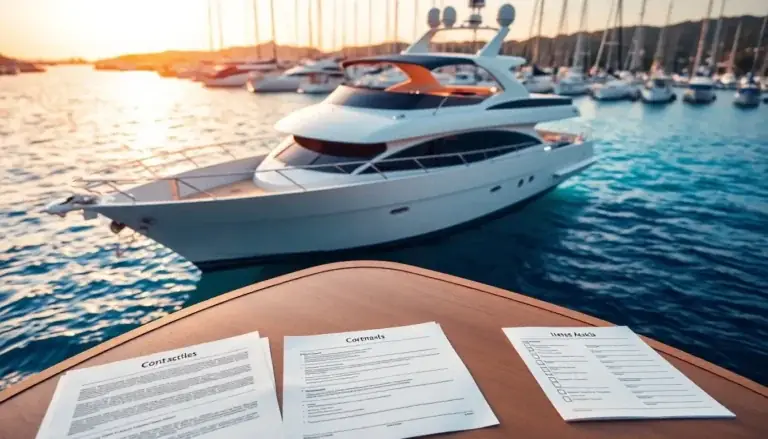
Commercial Passenger Manifest: The official legal document recording every individual onboard the vessel for safety and coast guard verification.
-
Corporate Charter Party Agreement: The specialized contract detailing event dates, permitted commercial activities, indemnification clauses, and financial terms.
-
Post-Event Operational Debrief Report: A structured review document compiled by the captain and event director analyzing logistics, safety performance, and client feedback.
Common Misconceptions and Oversimplifications
-
Myth: Any luxury private yacht can be rented for a corporate cocktail party hosting fifty business clients.
-
Correction: Private pleasure vessels are strictly limited by law regarding passenger counts; hosting large corporate groups requires a commercially certified passenger ship.
-
-
Myth: Standard corporate liability insurance automatically covers accidents occurring during maritime events.
-
Correction: General corporate policies frequently exclude marine operations, requiring specialized maritime event riders and third-party P&I extensions.
-
-
Myth: Conducting confidential board meetings on a yacht is inherently secure from electronic surveillance.
-
Correction: Without specialized satellite encryption, sound-dampening interiors, and strict communication protocols, marine environments can be vulnerable to electronic eavesdropping.
-
-
Myth: Weather conditions on the water are predictable and rarely disrupt corporate event schedules.
-
Correction: Coastal and open-water meteorology can shift rapidly, requiring robust contingency planning and onshore fallback venues.
-
-
Myth: Event catering on a yacht operates identically to a land-based hotel banquet operation.
-
Correction: Galley space constraints, maritime motion, and strict refrigeration limits require specialized marine chefs and streamlined menu engineering.
-
-
Myth: Placing corporate branding graphics on a superyacht requires no special port or flag-state permits.
-
Correction: Large banner displays or temporary structural modifications often violate local port bylaws or yacht class rules, requiring advance regulatory approval.
-
Ethical, Practical, or Contextual Considerations
Operating corporate events on the water carries significant responsibilities toward marine environmental protection, maritime labor welfare, and local community respect. Modern corporate maritime programs must enforce rigorous environmental standards—such as utilizing zero-discharge waste systems in protected coastal waters, adhering to strict fuel efficiency targets, and minimizing acoustic disruption to marine wildlife. Furthermore, corporate hosts hold an ethical duty to ensure fair labor practices, safe working hours, and respectful treatment for all crew members under international maritime conventions. Balancing high-level corporate hospitality with genuine environmental and social stewardship defines the modern standard of responsible maritime business leadership.
Conclusion
Deploying a high-end maritime asset for corporate events requires a sophisticated synthesis of strategic business planning, legal contract execution, maritime safety compliance, and hospitality engineering. Moving past superficial marketing materials to examine the structural realities of commercial passenger certification, safety management systems, data security, and specialized event insurance ensures that organizations can approach marine hosting with absolute confidence.
Whether selecting a long-range motor yacht for an intimate executive board retreat or a large commercially certified passenger vessel for a high-impact client entertainment cruise, the fundamental objective remains unchanged: establishing a secure, resilient, and flawlessly executed operating platform. Prioritizing rigorous administrative governance, professional shore-side support, and uncompromising safety standards transforms a marine venue into an enduring asset of corporate distinction and strategic success.