Best Yachting for Events: Ultimate Corporate & Charter Guide
Hosting high-stakes corporate gatherings, brand activations, and private celebrations on water requires an intricate harmonization of maritime logistics, crowd management engineering, and specialized legal compliance. Moving past conventional land-based venue planning, a marine-hosted occasion operates within a fluid jurisdiction where weather shifts, vessel capacity limits, and stringent stability regulations dictate every operational parameter. Planners seeking the best yachting for events must look beyond sleek exterior profiles to analyze gross tonnage capacities, deck traffic flow dynamics, catering infrastructure, and specialized commercial charter licensing.
The commercial maritime event sector is frequently misrepresented by promotional imagery that glosses over the severe logistical friction of municipal port clearances, safety briefing mandates, and passenger liability insurance limits. A successful floating gathering demands meticulous coordination between event production teams, vessel captains, and port authorities to ensure that aesthetic ambitions never compromise maritime safety or legal compliance. Misjudging these operational variables exposes organizers to sudden port detention, safety code violations, or severe reputational damage during high-profile gatherings.
Navigating this domain requires a systematic approach that matches the scale and objective of the occasion with the correct naval platform. Whether hosting an intimate executive retreat in a sheltered cove or orchestrating a massive product launch during an international film festival, understanding the mechanics of passenger vessel safety codes, stability criteria, and shore-power demands forms the bedrock of professional maritime event design.
Understanding “best yachting for events.”
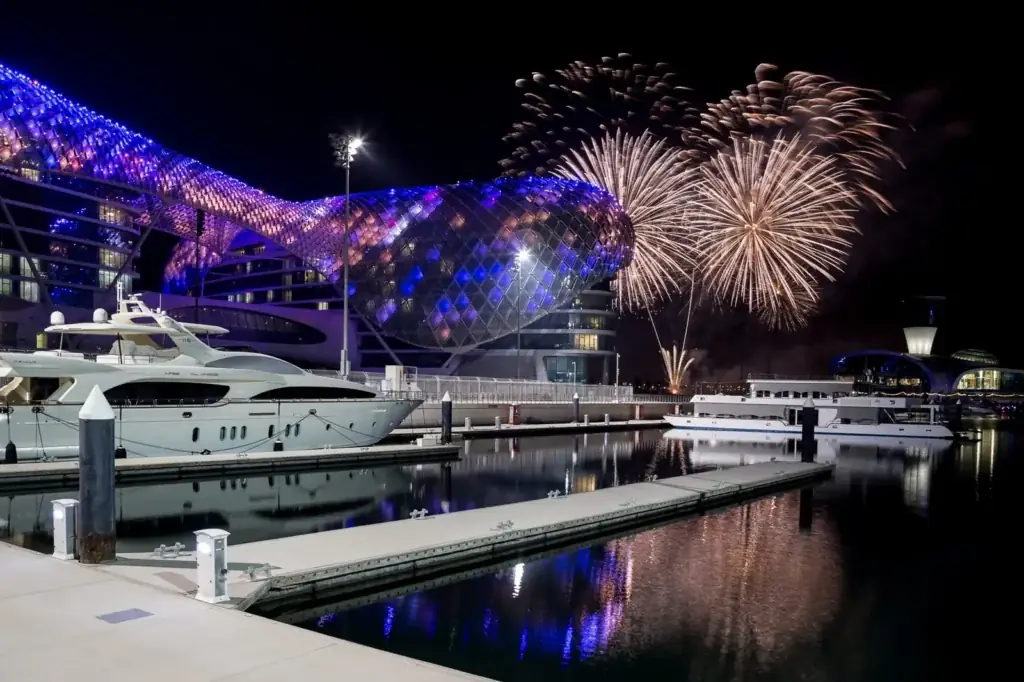
Analyzing what constitutes the best yachting for events requires dismantling the assumption that a luxury vessel designed for private cruising can seamlessly double as a commercial entertainment platform. In practice, an optimal event vessel represents a precise intersection between passenger safety certification, multi-level deck load capacity, localized sanitary facilities, and acoustic engineering. What fulfills the technical requirements of a static corporate gala moored permanently in a secure marina basin differs entirely from the parameters needed for a multi-day executive voyage across open coastal waters.
Frequent misunderstandings arise when organizers evaluate vessels based purely on sleeping berths or total length, ignoring the crucial distinction between overnight passenger limits and daytime cocktail event capacities. A yacht certified to sleep twelve guests under private charter rules may be legally restricted to carry only twelve total souls—including crew—under strict flag state commercial regulations when underway, unless upgraded to passenger ship safety standards. Ignoring these legal boundaries can lead to immediate Coast Guard intervention and heavy administrative fines.
Oversimplifying these regulatory and logistical realities exposes planners to catastrophic operational failure. Treating a yacht as an unregulated floating club venue overlooks critical factors such as graywater holding tank capacities during heavy catering use, electrical load limits when running sound systems and lighting rigs simultaneously, and gangway safety during heavy embarkation surges. A sophisticated approach treats the marine event platform as a heavily regulated commercial venue subject to strict maritime law.
Deep Contextual Background
The historical evolution of floating corporate and private hospitality reflects a profound shift from impromptu nineteenth-century yacht club regattas toward highly structured, corporate-sponsored commercial charter enterprises. Throughout the industrial era, large private steamships were utilized by industrialists and monarchs for private diplomacy and elite entertaining, yet these gatherings remained informal and largely exempt from modern passenger safety codes.
A structural transformation occurred in the latter half of the twentieth century with the codification of international maritime safety treaties, including the Safety of Life at Sea (SOLAS) conventions and the expansion of specialized commercial yacht codes. As coastal cities invested heavily in luxury marina infrastructure, demand surged for unique corporate entertainment venues capable of bypassing traditional land-based zoning restrictions. Concurrently, naval architects began designing high-volume motor yachts and catamarans featuring massive open-plan aft decks, convertible sky-lounges, and reinforced structural bulkheads designed to accommodate heavy AV equipment and large guest volumes. Today, selecting the right platform requires navigating an intricate web of flag state rules, international maritime labor standards, and localized municipal event permits.
Conceptual Frameworks and Mental Models
Executing high-yield maritime events requires analytical mental models that synthesize spatial traffic flow, regulatory compliance, and structural load distribution.
1. The Deck Load and Stability Equilibrium
This framework maps guest distribution density against vessel stability criteria. Concentrating large crowds on an upper sundeck alters the vessel’s center of gravity, increasing heel susceptibility. Planners must model dynamic guest movement to ensure ballast and stability thresholds remain within safe maritime limits.
2. The Infrastructure-to-Capacity Ratio
This mental model evaluates a vessel’s backstage and hospitality support systems—such as galley size, refrigeration volume, head (bathroom) count, and graywater holding capacity—against total headcounts. Events failing this ratio experience catastrophic service bottlenecks and sanitary overflows.
3. The Port-Jurisdiction Compliance Matrix
This operational model categorizes event venues by regulatory authority, distinguishing between internal marina basins, territorial coastal waters, and international high seas. Each zone imposes distinct licensing, tax, customs, and safety equipment mandates that dictate what activities are legally permissible onboard.
Key Categories or Variations of Marine Event Vessels
Categorizing the vast landscape of vessels used for gatherings requires grouping platforms by their structural architecture, passenger licensing limits, and primary event utility.
-
High-Volume Tri-Deck Motor Yachts: Multi-level luxury vessels featuring expansive sky-lounges, dedicated dining saloons, and sophisticated stabilization systems. Trade-off: Exceptional visual prestige and multi-zone entertainment spaces balanced by deep drafts and strict daytime passenger head count caps.
-
Commercial Catamaran Event Platforms: Wide-beam multihull vessels engineered with massive flat deck footprints and open salon spaces. Trade-off: Incredible stability at anchor, high guest volume capacity, and shallow draft access balanced by wide beam dimensions that limit standard slip availability.
-
Classic Heritage Tall Ships and Schooners: Restored traditional sailing vessels providing dramatic visual aesthetics and large open deck layouts. Trade-off: High atmospheric charm and authentic maritime character balanced by legacy rigging complexity and limited interior air-conditioned hospitality space.
-
Purpose-Built River and Coastal Cruisers: Commercial passenger vessels specifically designed for harbor tours, corporate dinners, and large-scale celebrations. Trade-off: Maximum passenger capacity, fully commercial galley setups, and ADA compliance balanced by utilitarian exterior styling.
-
Expedition Vessels Converted for Events: Heavy-duty steel hulls offering vast interior volume and rugged long-range capabilities for remote corporate retreats. Trade-off: Unmatched global range and unique exploration appeal balanced by industrial aesthetics and higher operational fuel burn.
-
Luxury Gulets and Motor-Sailers: Traditional wooden vessels featuring expansive aft deck dining tables and spacious shaded lounge areas. Trade-off: Intimate, relaxed atmosphere ideal for boutique gatherings balanced by slower transit speeds and traditional rigging maintenance.
Comparison of Marine Event Vessel Categories
| Vessel Category | Primary Structural Feature | Passenger Capacity Limit | Typical Event Utility | Primary Risk Factor |
| Tri-Deck Motor Yacht | Multi-level vertical deck architecture | Moderate (typically 12 to 50 depending on code) | Executive retreats, high-end client dinners | Center of gravity shifts during sundeck crowding |
| Commercial Event Catamaran | Wide-beam multi-hull flat platform | High (50 to 250+ depending on local certification) | Large corporate cocktail parties, product launches | Wide beam complicates dockage and slip reservations |
| Heritage Tall Ship | Traditional multi-masted rigging | Moderate to High (30 to 100+) | Brand activations, themed celebrations | Weather sensitivity and restricted interior volume |
| Commercial Harbor Cruiser | Utility passenger hull design | High (100 to 500+) | Large-scale weddings, corporate galas | Utilitarian aesthetic lacks luxury prestige |
Realistic Decision Logic
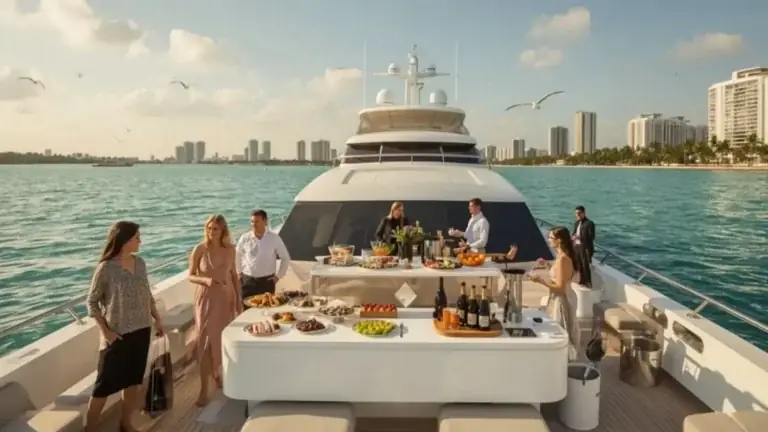
When event planners select a vessel class, choices must anchor in the event’s primary objective, guest headcount, and geographic location. If the goal is hosting a high-profile executive dinner or board meeting where privacy and elite luxury are paramount, targeting a high-volume tri-deck motor yacht moored in a secure Mediterranean harbor provides the ideal platform. Conversely, if the objective is executing a large brand activation for two hundred guests involving live music and catering, selecting a certified commercial event catamaran or coastal passenger cruiser ensures compliance with strict mass-passenger safety codes.
Detailed Real-World Scenarios and Operational Dynamics
To understand how these platforms perform under real-world event pressures, consider four distinct operational scenarios.
Scenario A: The High-End Product Launch in a Crowded Harbor
A global luxury brand hosts a sunset product launch for one hundred VIP guests aboard a tri-deck motor yacht moored in Monaco harbor during peak season.
-
Constraints: Strict municipal noise curfews, limited harbor slip availability, and high-security maritime police patrols.
-
Decision Point: As guests board, catering staff attempts to plug multiple high-draw catering ovens and sound amplifiers into the yacht’s domestic shore power inlet.
-
Failure Mode: The sudden electrical surge trips the vessel’s primary shore-power breaker, cutting cabin air conditioning and plunging the main deck into darkness.
-
Second-Order Effect: The chief engineer immediately initiates the auxiliary backup generator, while the event producer stages a smooth transition to ambient lighting, highlighting the necessity of pre-calculating electrical load distribution against shore-power limits.
Scenario B: The Corporate Incentive Retreat in Remote Archipelagos
An enterprise technology firm charters a commercial catamaran to host a multi-day executive incentive retreat across an isolated island chain.
-
Constraints: Lack of high-speed shore internet, remote anchorages, and varied guest mobility levels.
-
Decision Point: A sudden afternoon squall rolls into the anchorage, threatening to disrupt an outdoor beachfront gala scheduled on a local sandbar.
-
Failure Mode: Hesitating to pivot indoors leads to drenched equipment, ruined catering setups, and frustrated guests.
-
Second-Order Effect: The event captain utilizes the catamaran’s massive covered main salon as a seamless weather backup, shifting the bar and entertainment indoors within fifteen minutes and preserving guest morale.
Scenario C: The Coastal Gala with Exceeded Passenger Manifests
An event planner organizes a celebration on a motor yacht certified under private charter rules for a maximum of twelve overnight guests, inviting fifty friends for a daytime harbor cruise.
-
Constraints: Coast Guard passenger manifest limits, strict liability insurance exclusions.
-
Decision Point: Marine police intercept the vessel during a routine harbor patrol, noting forty extra passengers onboard above the certified builder and flag state limit.
-
Failure Mode: Immediate vessel detention, heavy financial fines, and forced disembarkation of all guests, destroying the event.
-
Second-Order Effect: The planner learns the critical distinction between private overnight capacity and commercial passenger vessel (cpv) certification, ensuring all future events utilize properly coded commercial vessels.
Scenario D: The Marina Docking Logistics Failure
A large event catamaran attempts to dock at a tight municipal pier to load catering supplies and equipment just two hours before a major corporate gala.
-
Constraints: Strong crosswinds, narrow slip clearances, and heavy commercial port traffic.
-
Decision Point: The captain struggles against a twenty-knot crosswind while approaching the pier without tugboat assistance.
-
Failure Mode: The wide catamaran beam catches the wind, pushing the stern against a concrete piling and denting the rub rail.
-
Second-Order Effect: The event schedule is delayed by two hours while damage inspections occur, demonstrating why large-scale marine events must factor buffer time and professional harbor pilot assistance into load-in schedules.
Planning, Cost, and Resource Allocation
Budgeting for a marine-hosted event requires balancing charter lease fees against complex production, catering, security, and municipal permitting expenses.
Financial Dynamics and Cost Variability
| Expense Category | Estimated Financial Range | Primary Cost Driver | Financial Risk / Value Impact |
| Vessel Event Charter Fee | $10,000 – $150,000+ per day | Vessel tonnage, builder pedigree, peak seasonal timing | Secures the physical venue asset and core crew |
| Commercial Event Permitting & Port Fees | $1,000 – $10,000+ per event | Municipal jurisdiction, anchorage tariffs, police escorts | Required legal compliance to avoid port detention |
| Event Production & AV Rigging | $5,000 – $40,000+ | Specialized marine-safe lighting, sound, temporary staging | Transforms the vessel into a branded experiential space |
| Specialized Catering & Bar Sub-contracting | $100 – $350+ per guest | Galley limitations, offshore provisioning logistics | Direct driver of guest satisfaction and culinary quality |
Opportunity Costs and Resource Allocation
A common administrative error made by corporate event planners involves allocating the vast majority of the budget toward the vessel charter fee while underfunding essential production elements such as auxiliary power generators, specialized marine staging, and professional security staff. On a marine vessel, standard land-based AV rental gear frequently fails due to salt-air corrosion and unstable power grids. Allocating resources toward marine-grade production equipment and experienced local maritime production managers yields a far higher return on investment than securing an oversized luxury hull without adequate event infrastructure.
Tools, Strategies, and Support Systems
Executing elite marine events successfully requires utilizing specialized maritime logistics software, port agency networks, and production management tools.
-
Global Port Agency Networks: Vetted maritime agencies coordinating customs clearance, local municipal event permits, and secure dockage reservations. Limitation: Bureaucratic processing times vary widely by country, requiring early engagement.
-
Marine-Grade Temporary Power Generators: Silenced diesel generators providing redundant electrical capacity for heavy AV and catering rigs. Limitation: Must be safely secured on deck to prevent shifting during wave action.
-
Digital Guest Manifest and Embarkation Apps: Real-time boarding management software tracking headcounts to ensure compliance with strict vessel safety limits. Limitation: Dependent on reliable cellular or satellite internet connectivity at the dock.
-
Specialized Event Insurance and Rider Policies: Comprehensive commercial liability policies covering third-party bodily injury, property damage, and weather cancellation. Limitation: Premium rates spike dramatically for events involving open ocean transits or high-risk stunts.
-
Custom Fender and Hull Protection Systems: Heavy-duty inflatable fenders and protective wraps preventing structural damage during multi-vessel raft-ups. Limitation: Requires trained deck crew to deploy and monitor continuously.
-
Satellite Communication and Broadband Bundles: High-bandwidth marine internet systems supporting live streaming, media uploads, and corporate presentations at sea. Limitation: High subscription costs and hardware installation requirements.
Risk Landscape and Failure Modes
Hosting events in a marine environment introduces severe regulatory, environmental, and operational hazards that require systematic prevention frameworks.
Taxonomy of Marine Event Risks
-
Regulatory and Legal Penalties: Exceeding certified passenger limits, operating without commercial event permits, and violating local noise ordinances.
-
Environmental and Weather Hazards: Sudden squalls disrupting open-deck setups, strong tidal currents complicating docking, and rogue swells causing motion sickness among guests.
-
Mechanical and Utility Failures: Electrical overloads tripping ship systems, graywater holding tank overflows during heavy catering use, and air conditioning breakdowns.
-
Crowd and Safety Hazards: Falls from elevated decks, gangway slips during embarkation, and unauthorized access to restricted crew working zones.
Compounding Risk Events
In maritime event operations, minor oversights frequently compound into severe logistical crises. For example:
-
Initial Oversight: An event planner fails to verify the exact commercial passenger vessel (CPV) certification limit for a chartered yacht, assuming private sleeping berths equal event capacity.
-
Secondary Complication: The invitation list expands by twenty unexpected VIP attendees, pushing the total onboard head count past the legal flag-state safety limit.
-
Compounding Hazard: During the event peak, port authorities board the vessel for a random compliance check and discover the manifest violation.
-
Critical Failure: The vessel is ordered to return to the pier immediately, terminating the high-profile corporate event in front of key clients and triggering severe regulatory fines.
This cascading vulnerability highlights why strict adherence to passenger manifests and regulatory codes is non-negotiable for event success.
Governance, Maintenance, and Long-Term Adaptation
Sustaining a secure and repeatable marine event strategy requires rigorous pre-event walk-throughs, continuous onboard monitoring during execution, and structured post-event debriefing sessions.
Monitoring and Review Cycles
Event producers and vessel captains should conduct comprehensive safety briefings before guest embarkation, verifying lifejacket locations, emergency exit routes, and fire suppression protocols. Following the event, conducting a formal review of logistical bottlenecks, catering flow, and power utilization ensures continuous improvement for subsequent productions.
Layered Marine Event Verification Checklist
-
Commercial Code and Manifest Verification: Confirm that the vessel holds valid commercial passenger certification matching the exact guest head count.
-
Electrical Load and Generator Test: Test all auxiliary power units, shore-power connections, and sound system draws before guest arrival.
-
Gangway and Embarkation Safety: Install non-slip treads, safety netting, and dedicated crew supervision along the brow or gangway.
-
Waste and Graywater Management Plan: Verify holding tank capacities and schedule pump-out services immediately following the event conclusion.
-
Weather and Contingency Route Review: Establish clear go/no-go weather thresholds and secure indoor backup spaces for open-deck activations.
Measurement, Tracking, and Evaluation
Assessing the overall success of a marine-hosted event requires balancing quantitative operational metrics with qualitative guest satisfaction evaluations.
Leading vs. Lagging Indicators of Event Success
-
Leading Indicators (Predictive of positive outcomes):
-
Thorough pre-event documentation review and verified commercial permits secured weeks in advance.
-
Strict adherence to guest head-count tracking using digital boarding manifests.
-
Proactive electrical load testing and redundant generator deployment.
-
Clear communication of dress code and footwear guidelines (e.g., no stiletto heels on teak decks) distributed to guests prior to boarding.
-
-
Lagging Indicators (Retrospective outcome metrics):
-
Zero regulatory citations, port detentions, or safety violations throughout the production.
-
Seamless catering and beverage execution with zero utility or sanitary bottlenecks.
-
High qualitative feedback scores from corporate clients and attendees regarding ambiance and comfort.
-
On-budget financial reconciliation with zero unexpected overtime or damage penalty fees.
-
Formal Documentation Examples
-
Event Safety Briefing Log: A signed record confirming that all crew and production staff completed emergency procedure training before guest arrival.
-
Vessel Handover and Condition Report: A legal document recording the cosmetic and mechanical state of the yacht before and after the event production.
-
Post-Event Operational Dossier: A comprehensive debrief summarizing power consumption, guest headcounts, vendor performance, and logistical lessons learned to guide future planning.
Common Misconceptions and Oversimplifications
-
Myth: Any luxury yacht available for private charter can automatically host large corporate cocktail parties or product launches.
-
Correction: Private luxury yachts are typically certified for a maximum of twelve overnight guests; hosting large daytime events requires specialized commercial passenger vessel (CPV) certification and strict flag state compliance.
-
-
Myth: Standard land-based catering companies and AV rental firms can operate seamlessly on marine vessels without specialized preparation.
-
Correction: Marine galleys have limited space and power, and standard AV equipment frequently fails due to salt-air corrosion and unstable power grids, requiring specialized marine vendors.
-
-
Myth: Mooring a yacht permanently in a marina during an event eliminates all weather-related risks and motion sickness.
-
Correction: While static marina mooring eliminates open-water motion, wakes from passing commercial traffic can still cause vessel surging and rocking, requiring proper fendering and gangway monitoring.
-
-
Myth: Obtaining a local municipal event permit for a floating gathering is a simple formality handled automatically by the charter broker.
-
Correction: Securing commercial event permits, anchorage clearances, and police escorts involves complex bureaucratic filings that often require dedicated maritime legal agents.
-
-
Myth: Stiletto heels and formal footwear pose no structural risk to high-end teak decks on luxury event yachts.
-
Correction: Narrow stiletto heels dent traditional teak wood and damage delicate interior flooring, which is why most event yachts enforce strict soft-shoe or barefoot policies.
-
-
Myth: Operating a marine event at night is identical to daytime operations in terms of safety and staffing requirements.
-
Correction: Night operations introduce severe visibility limitations, requiring enhanced deck lighting, specialized watchkeeping, and rigorous crowd control to prevent overboard incidents.
-
Ethical, Practical, or Contextual Considerations
Operating commercial events on marine vessels carries a profound responsibility toward local coastal environments and harbor communities. Responsible event production requires strict adherence to environmental regulations—such as utilizing designated pump-out facilities for graywater and blackwater management, strictly prohibiting single-use plastics onboard, and ensuring waste is disposed of ashore in accordance with local recycling laws. Furthermore, event organizers must respect municipal noise curfews when moored near residential waterfronts, manage vessel wakes to protect fragile shorelines, and support local maritime economies. Balancing high-end corporate hospitality with rigorous ecological stewardship ensures that pristine coastal waters remain protected for future generations of mariners and communities.
Conclusion
Designing and executing successful marine-hosted events requires a sophisticated synthesis of maritime law, crowd management engineering, and rigorous logistical planning. Moving past promotional marketing narratives to examine the structural realities of commercial passenger codes, electrical load limits, stability criteria, and port regulations ensures that organizers can approach floating event production with absolute confidence.
Whether selecting a high-volume tri-deck motor yacht for an executive retreat or a commercial catamaran for a large-scale brand activation, the fundamental objective remains unchanged: establishing a secure, compliant, and memorable environment where every operational variable is accounted for. Prioritizing regulatory compliance, specialized marine vendors, and uncompromising safety standards transforms a standard maritime gathering into an enduring asset of corporate and private prestige.