Top Mega Yacht Plans: Definitive Naval Architecture & Design Guide
Naval architecture and custom superyacht engineering represent the absolute peak of modern industrial design, merging advanced hydrodynamic efficiency with ultra-luxury architectural interior spaces. Moving far beyond standard vessel production or off-the-shelf brokerage catalogs, the conception and execution of large-scale vessels require navigating a complex web of naval regulations, weight distribution formulas, weight-to-power ratios, and custom structural engineering. Principals, maritime family offices, and experienced yacht buyers seeking out the top mega yacht plans must look past promotional exterior renderings and lifestyle imagery to analyze structural architecture, propulsion architecture, weight management, and long-term operating economics.
The development of custom and semi-custom vessel blueprints is frequently oversimplified by observers who treat superyacht design as a pure exercise in interior styling and aesthetic indulgence. In practice, evaluating and reviewing advanced maritime concepts involves balancing competing engineering demands: managing gross tonnage limits under international maritime codes; integrating hybrid or diesel-electric propulsion arrays; and ensuring structural rigidity across multi-deck steel and aluminum structures. A rigorous evaluation framework prevents catastrophic engineering miscalculations, budget overruns, and regulatory compliance failures during construction.
This analysis establishes an exhaustive reference blueprint for assessing, structuring, and executing major naval design projects. By dissecting historical shifts, mental models, structural variations, financial frameworks, and risk taxonomies, this guide provides the foundational depth required to evaluate high-end marine architectures with absolute editorial authority and analytical precision.
Understanding “top mega yacht plans.”
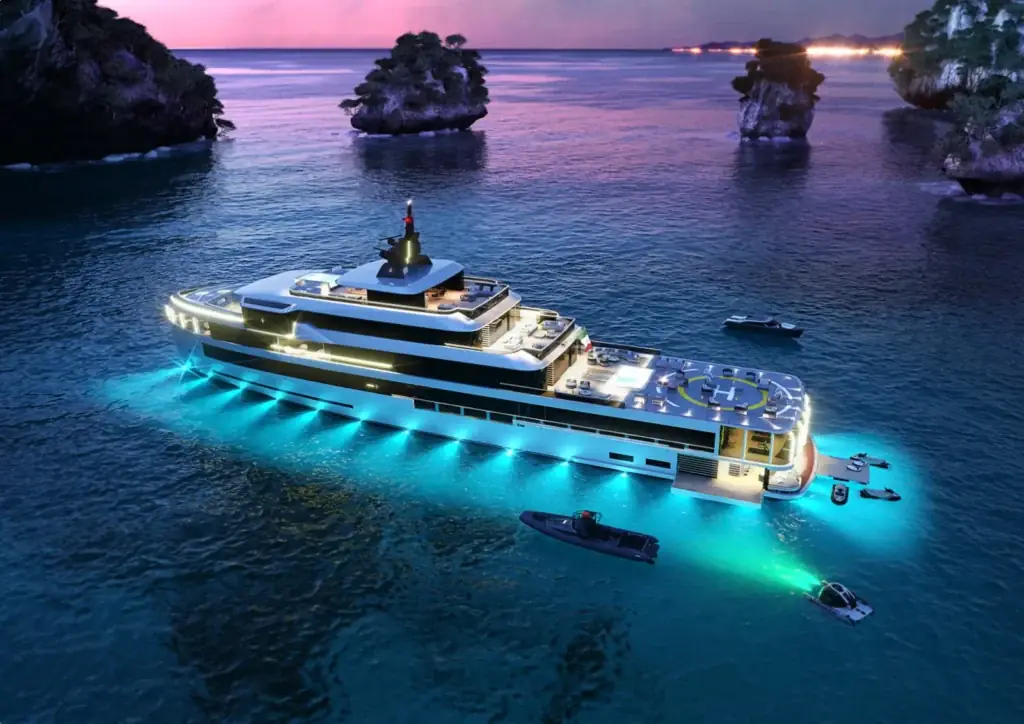
Investigating the structural mechanics that define the top mega yacht plans requires dismantling the misconception that custom superyacht design is a standardized industrial manufacturing process. An optimal design evaluation integrates naval architecture, class society rules (such as Lloyd’s Register or Bureau Veritas), stability criteria under the Large Yacht Code (LYC) or Passenger Yacht Code (PYC), and bespoke interior engineering into a cohesive blueprint. Whether evaluating an explorer vessel designed for polar navigation or a sleek displacement hull optimized for Mediterranean coastal cruising, the core assessment rests on how effectively the general arrangement (GA) and structural engineering support the owner’s long-term operational ambitions.
Common misunderstandings in high-end yacht planning frequently center on gross tonnage thresholds and stability physics. Novice buyers often assume that adding length automatically improves interior comfort, ignoring the profound regulatory shifts that occur when crossing the 500 gross tonnage (GT) or 3,000 GT boundaries, which trigger mandatory compliance with stricter international safety and crewing treaties. Furthermore, many participants underestimate the impact of vertical center of gravity (VCG) management, failing to recognize that heavy swimming pools, glass bulkheads, and massive tender garages on upper decks can severely compromise vessel stability if not counterbalanced by deep ballasting and hull design.
Oversimplifying these engineering and regulatory variables exposes owners to severe financial overruns, construction delays, and potential class rejections. A rigorous evaluation framework synthesizes naval science, regulatory compliance, and weight distribution analysis to identify design plans that maintain absolute structural integrity, seaworthiness, and uncompromised aesthetic execution.
Deep Contextual Background
The evolution of mega yacht naval architecture reflects the broader transformation of heavy manufacturing, metallurgy, propulsion engineering, and global wealth distribution over the past century. Historically, large private vessels were direct adaptations of commercial steamships or naval hulls, reflecting utilitarian construction methods and heavy steel plate fabrication. As the twentieth century progressed, the rise of specialized custom shipyards—particularly across Northern Europe and Italy—transformed superyacht construction into a distinct artistic and engineering discipline characterized by lightweight aluminum superstructures, high-tensile steel hulls, and sophisticated computer-aided design.
The latter half of the twentieth century witnessed the professionalization of custom yacht design studios, establishing a distinct separation between exterior styling, interior architecture, and naval engineering. Concurrently, the codification of international maritime safety treaties, including the International Convention for the Safety of Life at Sea (SOLAS) and specialized yacht codes, forced a structural evolution in how general arrangements are engineered. In the contemporary era, the market is defined by a shift toward eco-friendly propulsion systems, fuel cell integration, expedition capability, and massive wellness-oriented interior volumes that challenge traditional hull forms.
Conceptual Frameworks and Mental Models
Navigating the complexities of custom superyacht design requires robust mental models that synthesize weight distribution, hydrodynamic efficiency, and spatial ergonomics.
1. The Volume-to-Displacement Ratio Model
This framework maps gross tonnage (interior volume) against hull displacement (actual weight), illustrating that maximizing interior guest space requires careful management of buoyancy and structural mass to prevent sluggish sea-keeping performance.
2. The Weight and Vertical Center of Gravity (VCG) Equilibrium
This mental model separates structural mass distribution from superstructure additions, demonstrating how elevating heavy amenities like pools and helicopter decks requires strict mathematical counterbalancing in the keel and hull design.
3. The Operational Range-to-Propulsion Efficiency Scale
This analytical model evaluates engineering plans based on fuel burn curves, hull form resistance, and hybrid battery storage integration, demonstrating how long-range transoceanic capability relies on optimized hull displacement speeds.
Key Categories or Variations of Superyacht Architectural Plans
Categorizing the vast spectrum of custom vessel blueprints requires examining how distinct hull forms, propulsion types, and layout configurations serve specialized owner requirements.
-
Full-Displacement Classic Motor Yacht Plans: Traditional heavy-displacement steel hulls engineered for smooth, stable long-range passage-making at economical speeds. Trade-off: Exceptional seakeeping in heavy weather and vast fuel range balanced by lower top speeds and high displacement inertia.
-
Fast Displacement and Semi-Displacement Plans: Hybrid hull forms featuring bulbous bows and chine configurations designed to lift slightly at higher speeds to reduce hydrodynamic drag. Trade-off: Versatility across both efficient cruising speeds and rapid sprint capabilities balanced by increased engine power requirements and complex structural framing.
-
Explorer and Expedition Vessel Plans: Rugged, ice-strengthened steel hulls featuring massive aft working decks, extensive cold-storage provisioning, and helicopter hangars. Trade-off: Unmatched global autonomy, safety in remote latitudes, and durable industrial styling balanced by utilitarian exterior aesthetics and heavy displacement.
-
Sailing Superyacht and Rigged Multihull Plans: High-performance sailing configurations utilizing carbon-composite rigging, lifting keels, and subterranean sail-handling systems. Trade-off: Authentic wind-powered propulsion, silent cruising, and striking silhouettes balanced by complex deck machinery and restricted interior headroom in hull extremities.
-
Catamaran and Trimaran Multihull Mega Yacht Plans: Wide-beam multi-hull architectures offering immense deck footprints, reduced rolling angles in anchorages, and high hydrodynamic efficiency. Trade-off: Massive usable square footage and stable platform dynamics balanced by complex docking requirements and high structural torsional forces.
-
Passenger Yacht Code (PYC) Compliant Mega Plans: Commercial-grade architectures designed to legally accommodate more than twelve overnight guests under strict safety regulations. Trade-off: Hospitality scale comparable to boutique cruise liners and high charter revenue potential balanced by heavy regulatory compliance and increased crew overhead.
Comparison of Superyacht Architectural Variations
| Architectural Plan Type | Hull & Structural Material | Typical Length Range | Primary Engineering Focus | Primary Risk Factor |
| Full-Displacement Motor Yacht | Steel Hull / Aluminum Superstructure | 50m to 100m+ | Long-range fuel efficiency and comfort | Excessive deadweight growth |
| Explorer / Expedition Plan | Ice-Class Steel / Reinforced Bow | 45m to 90m+ | Remote autonomy and structural durability | High maintenance overhead in harsh environments |
| Fast Displacement Plan | Lightweight Aluminum / Advanced Composites | 40m to 70m+ | Hydrodynamic lift and high sprint speed | Structural vibration and slamming loads |
| Sailing Superyacht Plan | Carbon Composite / High-Tensile Steel | 45m to 85m+ | Rigging load management and righting moment | Mast compression and structural fatigue |
Realistic Decision Logic
When principals and design teams evaluate potential vessel plans, choices must anchor in intended cruising grounds, guest capacity, and operational autonomy. If the objective is unhindered global exploration across high latitudes and remote archipelagos, investing in an ice-strengthened explorer plan with redundant mechanical systems is essential. Conversely, if the ambition is high-speed Mediterranean island-hopping with emphasis on expansive sun decks and shallow draft maneuverability, a semi-displacement aluminum or composite plan provides the necessary hydrodynamic profile.
Detailed Real-World Scenarios and Operational Dynamics
To understand how different superyacht architectural plans perform under real-world operating conditions, consider four distinct operational scenarios.
The Deadweight Margin Violation During Construction
A custom 70-meter motor yacht under construction exceeds its weight allowance during interior outfitting due to the installation of heavy marble bulkheads and custom stone artwork.
-
Constraints: Strict contractual displacement limits, class society draft marks, and intact stability regulatory curves.
-
Decision Point: The naval architect must decide whether to mandate the removal of heavy interior elements or alter the hull’s permanent ballast distribution.
-
Failure Mode: Ignoring weight growth pushes the vessel deeper into the water than its design waterline, reducing top speed, increasing fuel consumption, and failing statutory stability tests.
-
Second-Order Effect: The shipyard halts interior outfitting, conducts an immediate inclining experiment, and redesigns non-structural joinery using lightweight honeycomb cores to restore proper trim and stability margins.
The Transatlantic Explorer Heavy Weather Encounter
An expedition mega yacht encounters a severe 40-knot storm system while transiting the North Atlantic during a winter delivery voyage.
-
Constraints: High wave heights, dynamic structural wave-slamming loads, and fuel conservation requirements.
-
Decision Point: The captain must decide whether to maintain heading into the head seas or heave-to to minimize structural acceleration forces.
-
Failure Mode: Pushing excessive speed through steep head seas risks structural fatigue cracking in the bow plating and unsecured interior damage.
-
Second-Order Effect: The captain reduces speed, adjusts the heading by 20 degrees to smooth the motion, and utilizes active stabilization fins, validating the vessel’s robust bow flare and heavy-displacement stability.
The Shallow Draft Marina Berthing Challenge
A wide-beam 60-meter semi-displacement yacht attempts to secure a berth in a historic Mediterranean harbor with limited depth and tight turning basins.
-
Constraints: Deep hull draft, wide beam dimensions, and lack of bow thruster redundancy.
-
Decision Point: The captain must evaluate whether the harbor bathymetry safely accommodates the vessel’s draft at low tide or request an alternative offshore anchoring solution.
-
Failure Mode: Forcing entry into a shallow basin risks grounding the rudder and propellers, resulting in catastrophic mechanical damage and hull breach.
-
Second-Order Effect: The captain aborts the harbor approach, anchors safely in the outer bay, and utilizes high-speed limousine tenders to transport guests ashore.
The Hybrid Propulsion Battery Failure
A modern hybrid-electric superyacht experiences a battery management system fault while cruising silently in a protected ecological marine reserve.
-
Constraints: Strict environmental zero-emission local laws, reliance on battery energy storage, and backup generator protocols.
-
Decision Point: The chief engineer must decide whether to engage backup diesel generators or safely drop anchor until the system resets.
-
Failure Mode: Ignoring generator fail-safes risks a total blackout of hotel loads and critical navigation electronics in confined waters.
-
Second-Order Effect: The automated safety protocol instantly brings the backup diesel generators online, maintaining uninterrupted power while logging the diagnostic error for shore-side engineering review.
Planning, Cost, and Resource Allocation
Executing a custom mega yacht construction project requires meticulous financial planning that accounts for naval architecture fees, shipyard milestone payments, owner’s supplies, and continuous engineering contingencies.
Financial Dynamics and Cost Variability
| Planning Element | Estimated Financial Range | Primary Cost Driver | Financial Risk / Value Impact |
| Naval Architecture & Engineering | $2,000,000 to $10,000,000+ | Computational fluid dynamics, classification approvals | Establishes the core structural andhydrodynamicc foundation |
| Hull and Superstructure Fabrication | $20,000,000 to $150,000,000+ | Material selection (steel vs. aluminum vs. composite), tonnage scale | Represents the primary physical manufacturing cost |
| Interior Customization & Outfitting | $10,000,000 to $80,000,000+ | Rare artisan finishes, custom stonework, acoustic dampening | Drives ultimate resale value and onboard luxury ambiance |
| Mechanical Systems & Propulsion | $8,000,000 to $45,000,000+ | Hybrid battery banks, MTU/Caterpillar main engines, azimuth thrusters | Ensures mechanical reliability and regulatory emissions compliance |
Opportunity Costs and Resource Allocation
A frequent financial miscalculation made during superyacht planning involves underestimating the long-term carrying costs and depreciation curves associated with ultra-custom builds. Because bespoke design choices rarely command a direct return upon resale, capital allocated to highly idiosyncratic interior configurations often incurs a steep amortization penalty. Allocating financial resources toward proven hull platforms, flexible interior layouts, and efficient hybrid propulsion systems preserves secondary market liquidity while ensuring optimal on-water performance.
Tools, Strategies, and Support Systems
Managing complex superyacht design and construction projects effectively requires utilizing advanced naval engineering software, classification society networks, and specialized project management oversight.
-
Computer-Aided Naval Architecture Suites (NAPA / Maxsurf): Advanced software modeling hydrostatic stability, hull resistance, and weight distribution. Limitation: Requires highly skilled naval architects to interpret dynamic output data accurately.
-
Computational Fluid Dynamics (CFD) Simulators: Virtual testing environments analyzing hull water flow, wave generation, and propeller efficiency. Limitation: Computational models must be validated through physical tow-tank testing.
-
Classification Society Rulebooks (Lloyd’s Register / DNV): International regulatory standards governing structural scantlings, fire safety, and electrical systems. Limitation: Rigid compliance rules can occasionally conflict with avant-garde aesthetic ambitions.
-
Owner’s Representative and Project Management Teams: Independent marine surveyors and engineers overseeing shipyard build quality on behalf of the principal. Limitation: Relies heavily on the inspector’s vigilance and technical expertise.
-
3D Virtual Reality Interior Walkthrough Suites: Immersive digital environments visualizing interior architecture, lighting, and spatial ergonomics prior to physical joinery. Limitation: Does not fully replicate tactile material textures or acoustic qualities.
-
Global Maritime Supply Chain Networks: Specialized logistics channels sourcing certified marine-grade materials, exotic woods, and specialized propulsion components. Limitation: Subject to international trade disruptions and raw material price volatility.
Risk Landscape and Failure Modes
Operating and constructing custom mega yachts introduces severe physical, financial, regulatory, and technical hazards that require proactive risk mitigation.
Taxonomy of Mega Yacht Project Risks
-
Weight Growth and Stability Degradation: Uncontrolled addition of interior mass pushing the vessel over critical tonnage and stability thresholds.
-
Structural Fatigue and Vibration Resonance: Poor hull-engine alignment or inadequate structural bracing leading to excessive interior noise and harmonic vibration.
-
Regulatory Non-Compliance: Failure to satisfy changing international maritime conventions (such as MARPOL environmental rules), preventing flag-state registration.
-
Supply Chain and Shipyard Insolvency: Financial distress or bankruptcy of the construction shipyard during the multi-year build cycle.
Compounding Risk Events
In superyacht engineering and construction, minor initial oversights frequently compound into major structural disasters. For example:
-
Initial Oversight: The interior designer specifies dense stone veneer paneling without verifying weight allowances with the naval architect.
-
Secondary Complication: The extra tonnage is added across the upper bridge deck during construction, raising the vessel’s vertical center of gravity.
-
Compounding Hazard: During the final inclining experiment, the vessel fails its statutory stability criteria, exhibiting an excessive rolling period and inadequate righting arm.
-
Critical Failure: The shipyard is forced to cut open the superstructure, strip out the heavy stonework, and add hundreds of tons of permanent internal ballast, delaying delivery by twelve months and incurring millions in rework costs.
This cascading vulnerability illustrates why rigorous weight control protocols, continuous cross-discipline communication, and strict adherence to naval architecture standards are essential for project success.
Governance, Maintenance, and Long-Term Adaptation
Sustaining a secure and efficient superyacht asset requires adherence to strict pre-commissioning trials, continuous condition monitoring, and structured dry-docking cycles.
Monitoring and Review Cycles
Captains, chief engineers, and management companies must conduct routine classification surveys, vibration analysis audits, hull thickness non-destructive testing (NDT), and safety equipment recertifications. For ongoing vessel operations, structured five-year special surveys mandated by class societies ensure that structural and mechanical integrity remains uncompromised over decades of service.
Layered Mega Yacht Construction & Operation Checklist
-
Hydrostatic and Stability Verification: Review inclining experiment results and confirm compliance with international stability booklets.
-
Class Society Scantling Inspection: Ensure structural steel or aluminum framing meets approved classification scantling rules.
-
Vibration and Noise Attenuation Audit: Verify that interior noise levels meet or exceed ISO acoustic comfort standards across all guest cabins.
-
Mechanical Redundancy Check: Confirm the operational status of emergency generators, fire suppression systems, and bilge pumps.
-
Environmental Compliance Review: Ensure sewage treatment plants, oily water separators, and exhaust scrubbers comply with current IMO regulations.
Measurement, Tracking, and Evaluation
Assessing the overall success of a mega yacht design and build project requires balancing quantitative engineering metrics with qualitative operational performance.
Leading vs. Lagging Indicators of Success
-
Leading Indicators (Predictive of positive outcomes):
-
Flawless correlation between computer-aided CFD simulations and physical model tow-tank test results.
-
Strict adherence to weight budgets and deadweight margins during major structural outfitting milestones.
-
Zero major non-conformities identified during preliminary classification society plan approvals.
-
Smooth integration of complex hybrid electrical and mechanical propulsion systems during harbor sea trials.
-
-
Lagging Indicators (Retrospective outcome metrics):
-
Successful issuance of the final Builder’s Certificate and international statutory certificates without operational restrictions.
-
Exemplary performance during speed, maneuverability, and fuel consumption trials meeting contractual guarantees.
-
High qualitative satisfaction scores from the principal regarding interior ergonomics, spatial flow, and acoustic quietness.
-
Absence of premature structural fatigue cracking, mechanical breakdowns, or warranty claims during the initial operating season.
-
Formal Documentation Examples
-
General Arrangement (GA) Drawing: The foundational blueprint illustrating deck layouts, bulkhead positions, cabin configurations, and vertical access routes.
-
Stability Booklet: The official statutory document detailing intact and damaged stability calculations approved by the flag state and classification society.
-
Sea Trials Performance Report: The comprehensive technical log recording vessel speed, turning circles, stopping distances, and machinery vibration profiles.
Common Misconceptions and Oversimplifications
-
Myth: Designing a custom mega yacht is primarily an interior styling exercise driven by fashion and furniture choices.
-
Correction: Interior styling represents only the final layer of a deeply complex engineering discipline governed by naval architecture, structural weight limits, and international maritime safety codes.
-
-
Myth: Adding length to a yacht design automatically improves its interior comfort and stability.
-
Correction: Length increases must be meticulously balanced with beam, depth, and weight distribution to prevent negative impacts on vessel hydrodynamics and bending moments.
-
-
Myth: Classification societies function merely as rubber-stamp administrative agencies for new build projects.
-
Correction: Classification societies enforce rigorous structural, mechanical, and safety standards with statutory legal authority; failure to comply prevents vessel registration and insurance.
-
-
Myth: Hybrid and electric propulsion systems on mega yachts eliminate the need for traditional fossil-fuel generators.
-
Correction: Due to the massive hotel electrical loads of modern superyachts, internal combustion generators remain essential for primary power generation and battery recharging.
-
-
Myth: Explorer yachts are slow, utilitarian vessels incapable of offering high-luxury interior environments.
-
Correction: Modern explorer yacht plans successfully combine rugged ice-class steel hulls with ultra-luxurious, Michelin-grade interior amenities and expansive wellness spas.
-
-
Myth: A completed yacht design can be easily modified mid-construction without affecting the overall build schedule or budget.
-
Correction: Altering structural bulkheads or weight distributions after steel cutting has commenced triggers cascading engineering revisions, massive cost overruns, and severe delivery delays.
-
Ethical, Practical, or Contextual Considerations
Operating and constructing ultra-large custom vessels carries a profound responsibility toward marine environmental preservation, maritime labor standards, and coastal community respect. Modern superyacht engineering must prioritize ecological stewardship—such as implementing advanced wastewater treatment systems, utilizing low-emission propulsion, minimizing underwater radiated noise to protect marine mammals, and complying with strict regional emissions control areas (ECAs). Furthermore, shipyards and owners hold an ethical duty to ensure fair labor practices, safe working conditions, and rigorous training for all crew members under international maritime conventions. Balancing the pinnacle of industrial engineering with genuine environmental and social accountability defines the modern standard of responsible superyacht creation.
Conclusion
Developing, evaluating, and executing custom naval architectural plans for premier superyachts requires an uncompromising synthesis of naval science, structural engineering, regulatory compliance, and bespoke luxury design. Moving past superficial renderings to examine the fundamental realities of weight distribution, stability physics, gross tonnage thresholds, and mechanical redundancy ensures that principals and project teams can approach vessel construction with absolute confidence.
Whether reviewing plans for a rugged transoceanic explorer or a high-performance displacement motor yacht, the fundamental objective remains unchanged: establishing a secure, resilient, and flawlessly engineered operating platform. Prioritizing rigorous structural governance, professional project management, and uncompromised safety standards transforms a naval blueprint into an enduring maritime masterpiece of engineering distinction.