Best Yachting for Families: Definitive Charter & Vessel Guide
Transitioning from land-based vacations to a marine-based family environment requires a fundamental recalibration of domestic routines, spatial coordination, and safety management. Unlike hotels or resorts, where physical architecture remains static and external infrastructure absorbs behavioral fluctuations, a floating vessel operates within a fluid, highly responsive environment. Parents evaluating the best yachting for families must navigate an intricate matrix of hull configurations, psychological endurance limits across different age groups, crew syndication models, and dynamic coastal weather windows.
A successful family maritime journey requires balancing the structural safety of the vessel with the psychological comfort of children, teenagers, and multi-generational participants. Common pitfalls include selecting high-performance monohulls with steep heel angles and complex rigging that induce motion sickness or anxiety in younger guests, or designing transit routes that exceed comfortable daily attention spans. Addressing these variables demands an analytical framework that prioritizes stability, deck safety engineering, and realistic pacing over purely aesthetic considerations.
This analysis establishes an exhaustive reference blueprint for designing, evaluating, and executing multi-generational maritime vacations. By dissecting historical charter evolutions, structural safety hierarchies, financial resource dynamics, and tactical risk mitigation models, this guide equips family planners with the definitive technical standards required to assess and execute high-yield family voyages.
Understanding “best yachting for families.”
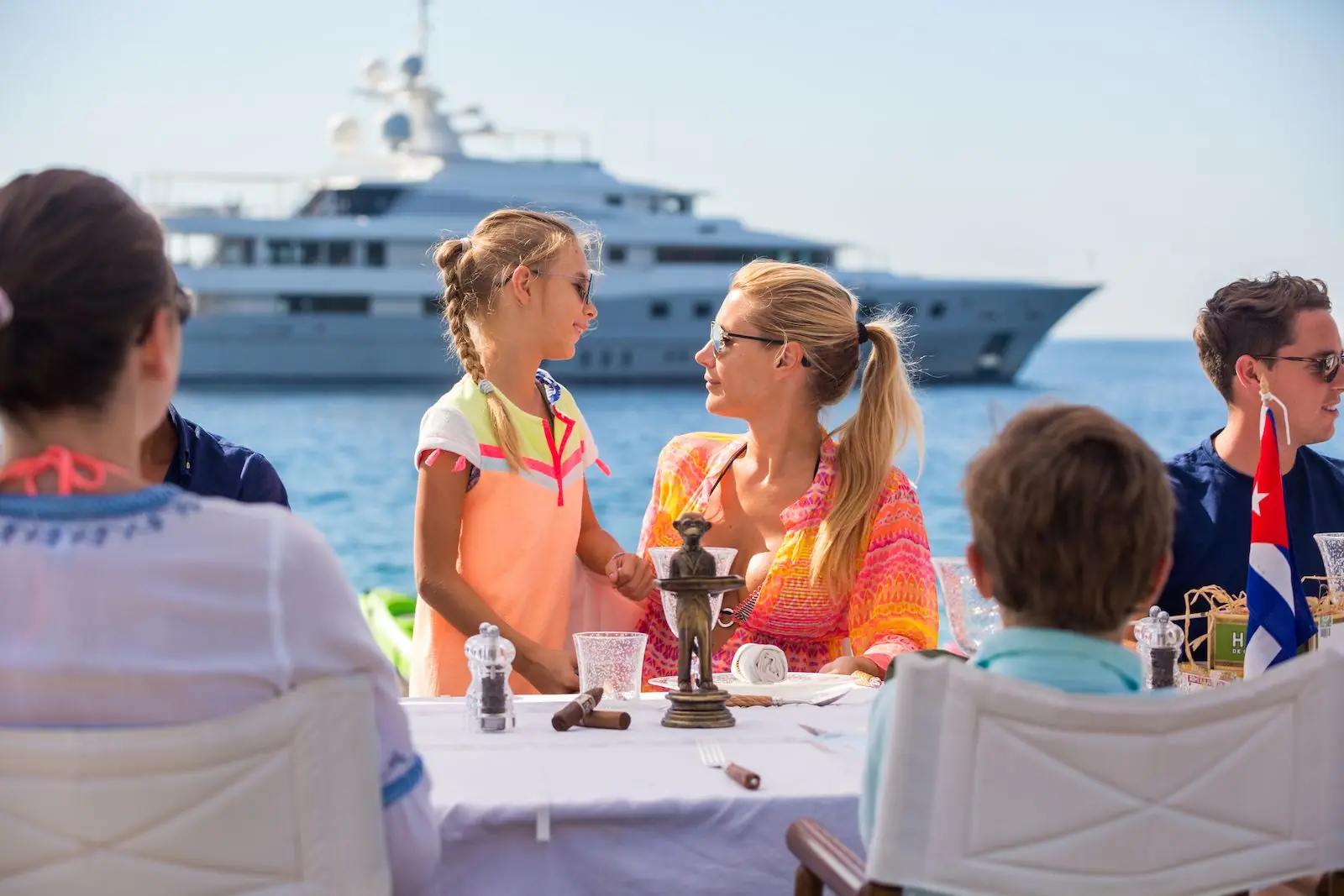
Evaluating the structural parameters of the best yachting for families requires moving past the superficial framing of brochure-style imagery to examine the physics of domestic life at sea. A family-oriented marine setup is defined by specific physical characteristics: wide, level deck layouts that minimize tripping hazards, secure cockpit enclosures that establish defined living areas for toddlers, robust lifeline heights, and independent cabin configurations that provide acoustic separation between parents and children.
Common misunderstandings in family maritime planning often revolve around scale and velocity. Novice family planners frequently assume that larger motor yachts or high-speed planing vessels are universally superior because they reduce transit times between islands. However, high-speed hulls can generate aggressive slamming motions in choppy seas, and massive multi-deck layouts introduce supervision challenges where young children can quickly move out of line-of-sight. Conversely, traditional racing monohulls offer poor initial stability, maintaining a constant 15-to-25-degree heel angle under sail that exhausts children and complicates basic onboard tasks like meal preparation or sanitation.
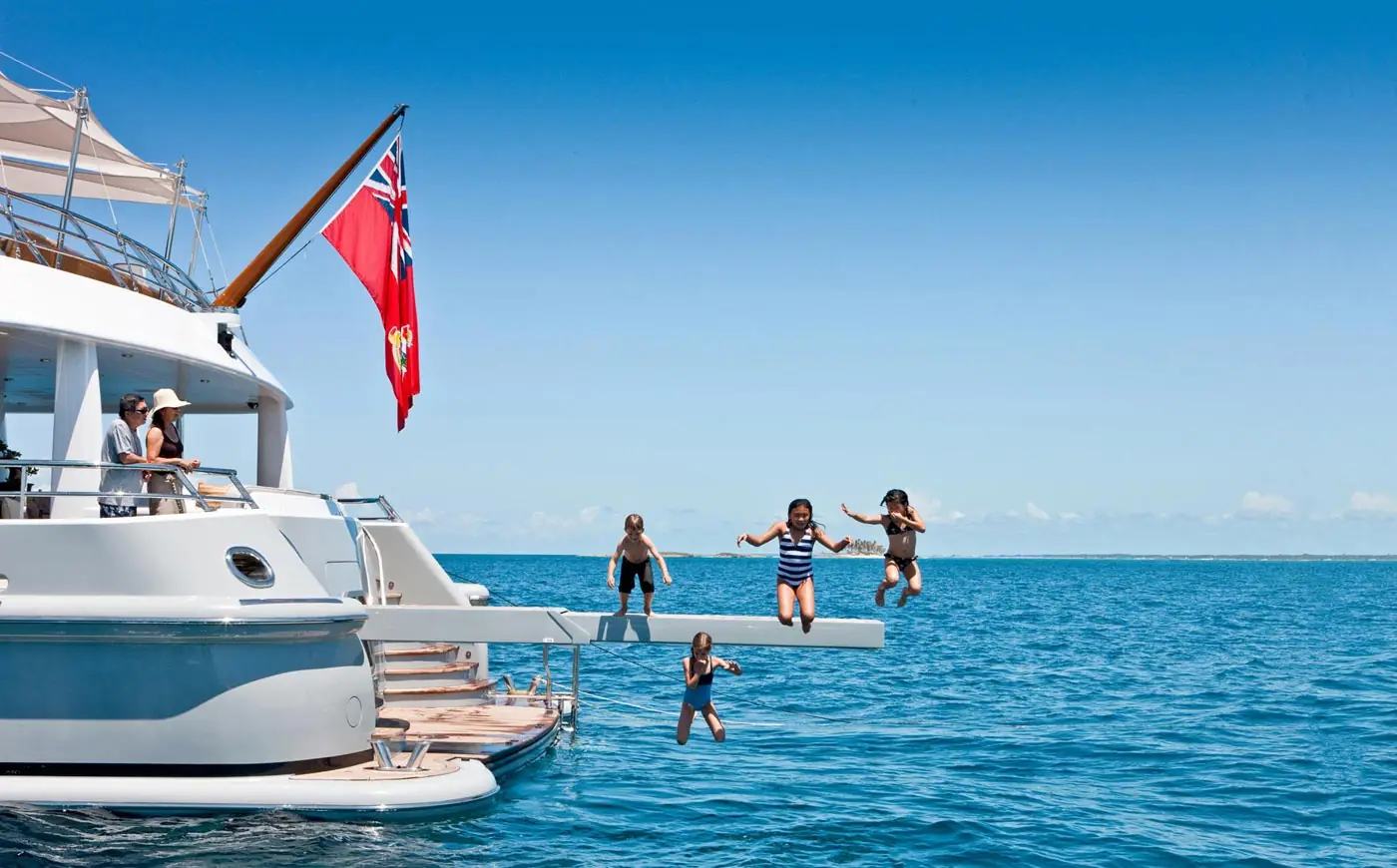
Oversimplifying these dynamics exposes families to severe logistical friction. Treating a yacht charter like a standard land-based villa rental ignores critical realities: freshwater conservation limits, greywater management, battery bank monitoring, and the physical fatigue associated with continuous motion. A truly family-centric charter plan integrates shorter transit windows, frequent swim-stop intervals, sheltered anchorage selection, and an appropriate ratio of professional crew support to alleviate parental exhaustion.
Deep Contextual Background
The evolution of family-oriented maritime recreation mirrors the broader democratization and commercialization of the global yacht charter market over the latter half of the twentieth century. Historically, long-distance voyaging and vessel ownership were restricted to maritime professionals, naval officers, or affluent elites who employed dedicated crews to manage all operational burdens. Children were rarely factored into early commercial charter designs, which prioritized technical sailing performance and adult social entertaining over domestic safety features.
The structural pivot toward family-centric design accelerated with the mainstream commercialization of the cruising catamaran in the 1980s and 1990s. Twin-hull naval architecture revolutionized family cruising by replacing narrow, unstable monohull platforms with expansive, level main decks and wide separation between sleeping quarters. Concurrently, the rise of professional crewed yacht management standards, codified child-safety net installations, and specialized family brokerage portfolios transformed how operators prepared vessels for multi-generational guests. In the contemporary era, the expansion of protected cruising infrastructure in the Mediterranean, the Caribbean, and the South Pacific has established reliable corridors where families can experience offshore exploration without sacrificing domestic predictability.
Conceptual Frameworks and Mental Models
Optimizing marine vacations for diverse age groups requires robust mental models that synthesize spatial ergonomics, psychological pacing, and risk governance.
1. The Domestic Motion Tolerance Curve
This framework maps a child or adult’s susceptibility to motion sickness and physical fatigue against hull motion dynamics and transit duration. Displacement catamarans and large stabilized motor yachts flatten lateral rolling motion, shifting the curve to allow extended family comfort during coastal transits, whereas light monohulls in beam seas compress the tolerance window rapidly.
2. The Supervision-to-Autonomy Gradient
This mental model analyzes the balance between strict physical safety containment (such as safety netting, cockpit gates, and constant monitoring) and developmental freedom for older children and teenagers. Effective family asset selection adjusts this gradient dynamically based on the age composition of the youth cohort aboard.
3. The Daily Attention-Span Budget
This operational model dictates that family cruising itineraries must align with the psychological attention spans of younger participants. It mandates a strict formula: morning transit windows capped at two to three hours, followed by mid-day anchorages dedicated to unstructured swimming and water sports, ensuring children remain engaged without experiencing travel fatigue.
Key Categories or Variations of Family Marine Itineraries
Categorizing family yachting arrangements requires examining how distinct vessel configurations, crew models, and regional routes cater to domestic requirements.
-
Fully Crewed Family Catamarans: Multihull vessels staffed by a professional captain, chef, and optional stewardess/hostess specializing in child-friendly itineraries and meal preparation. Trade-off: Maximum domestic relief and tailored culinary execution balanced by high capital outlay and shared crew living proximity.
-
Skippered Monohull Coastal Cruising: Single-hull sailing vessels managed by a professional skipper who handles navigation while parents assist with light deck duties alongside children. Trade-off: Authentic sailing engagement and lower charter entry costs balanced by heel angles and narrower interior living spaces.
-
Flotilla-Led Family Adventures: Coordinated multi-vessel group excursions escorted by a lead boat with an instructor and mechanic, providing built-in peer socialization for children. Trade-off: Reassuring technical support and structured group social events balanced by fixed daily schedules and route rigidity.
-
Self-Skippered Bareboat Family Loops: Independent family-managed rentals across calm, high-haven-density archipelagos. Trade-off: Absolute schedule flexibility and privacy balanced by total operational, navigational, and domestic liability falling squarely on the parents.
-
Luxury Gulet and Motor-Sailer Charters: Traditional wooden or steel motor-sailers featuring massive aft deck dining areas and vast interior volumes suitable for large multi-generational family reunions. Trade-off: Incredible deck space and traditional aesthetic charm balanced by slower cruising speeds and legacy mechanical upkeep.
-
Expedition-Style Family Wildlife Charters: Specialized reinforced vessels configured for exploring high-latitude marine ecosystems, whale-watching zones, or isolated island wildlife reserves. Trade-off: Unmatched educational and experiential depth for older children and teenagers balanced by industrial environments and cold-weather gear requirements.
Comparison of Family Charter Categories
| Family Charter Category | Primary Structural Asset | Operational Liability | Ideal Age Group Suitability | Relative Financial Commitment |
| Fully Crewed Catamaran | Dual-hull, massive deck footprint | Low for parents (managed by full professional crew) | All ages (infants to grandparents) | High |
| Flotilla Monohull/Cat | Supported fleet cruising | Moderate (parents skipper under lead boat guidance) | Ages 6 to 16 (peer socialization benefit) | Moderate |
| Skippered Monohull | Single-hull performance cruiser | Low-Moderate (skipper handles technical navigation) | Ages 10 to adult (tolerates heel angles) | Moderate to High |
| Bareboat Family Loop | Independent rental asset | High (parents hold absolute operational control) | Experienced sailing families with teenagers | Moderate |
Realistic Decision Logic
When family planners select a charter format, choices must anchor in the youngest participant’s age and the primary adult’s sailing competency. If the family includes toddlers or infants, prioritizing a fully crewed displacement catamaran operating in a sheltered basin like the Greek Ionian or the British Virgin Islands ensures maximum safety and domestic comfort. Conversely, if the family consists of experienced teenagers and at least one adult with verified bareboat skipper credentials, selecting an independent bareboat catamaran in Croatia or the US Virgin Islands fosters active skill-building and autonomy.
Detailed Real-World Scenarios and Operational Dynamics
To understand how family charter plans perform under real-world conditions, consider four distinct operational scenarios.
Scenario A: The Multi-Generational Ionian Island Hop
A three-generation family (including grandparents and two children aged 6 and 9) charters a 45-foot crewed catamaran in the calm Ionian Sea.
-
Constraints: Afternoon thermal breezes; need for frequent swim breaks; varying physical mobility levels between generations.
-
Decision Point: The midday heat peaks while transiting between islands, causing restlessness among the younger children and physical fatigue for the grandparents.
-
Failure Mode: Pushing forward toward a distant port without stopping increases stress and leads to general discomfort aboard.
-
Second-Order Effect: The captain alters the route immediately, tucks into a protected sandy cove for a two-hour swim stop and lunch, deploying floating mats and paddleboards, which restores family equilibrium and morale.
Scenario B: The Teenager Bareboat Transition in the Baltic
Parents and two teenagers undertake a bareboat monohull charter across the Stockholm archipelago.
-
Constraints: Rocky coastlines, numerous navigational markers, variable wind conditions, and the challenge of keeping teenagers engaged.
-
Decision Point: Approaching a tight natural harbor at dusk, communication breaks down between the helm and the teen deckhands handling lines.
-
Failure Mode: Mistimed line-handling causes the vessel’s stern pulpit to scrape lightly against a wooden pier piling during docking.
-
Second-Order Effect: The family establishes a formal pre-docking briefing protocol for all subsequent stops, assigning specific roles (helm, bow line, stern line, fender placement) to each family member to eliminate ambiguity.
Scenario C: The Toddler Safety Management Challenge on a Monohull
A family with a crawling toddler charters a standard monohull in a region with exposed side decks and steep companionway ladders.
-
Constraints: High risk of falls from companionway steps and unmonitored deck access.
-
Decision Point: The toddler wanders toward the unsecured cockpit opening while the parents are engaged in setting sail trim.
-
Failure Mode: A sudden luff of the sail creates an unexpected motion that startles the child near an unprotected deck edge.
-
Second-Order Effect: The crew immediately installs temporary safety netting along the lifelines and positions a custom companionway gate, reinforcing the rule that toddler mobility must be restricted to designated cockpit zones during underway transits.
Scenario D: The Medical Provisioning Crisis in Remote Waters
A family cruising an isolated island chain encounters a sudden case of an acute allergic reaction or ear infection in a young child.
-
Constraints: Distance from major medical facilities; limited cellular connectivity in remote anchorages.
-
Decision Point: Symptoms escalate during the late evening hours while anchored away from main port infrastructure.
-
Failure Mode: Inability to contact local shore-side pharmacies or medical support due to a lack of pre-planned emergency communication links.
-
Second-Order Effect: The captain utilizes the yacht’s satellite communication system to consult a remote telemedicine marine service, receives immediate dosage instructions, and weighs anchor to rendezvous with a local water-taxi service linked to the nearest mainland clinic.
Planning, Cost, and Resource Allocation
Executing a successful family marine vacation requires budgeting for direct charter fees, mandatory insurance waivers, crew gratuities, and child-specific safety enhancements.
Financial Dynamics and Cost Variability
| Planning Element | Estimated Cost Range | Primary Cost Driver | Financial Risk / Value Impact |
| Family Catamaran Charter Base | $6,000 – $25,000+ per week | Vessel size, builder pedigree, high-season timing | Secures stable multi-hull platform and living space |
| Professional Crew Gratuity | 10% to 20% of base fee | Service excellence, childcare engagement, culinary standard | Directly impacts crew motivation and childcare quality |
| Advanced Provisioning Allowance (APA) | 25% to 30% of base fee | Specialized child dietary needs, fuel, marina fees | Covers variable domestic consumption and utility costs |
| Safety Netting & Child Gear Rental | $150 – $500 per charter | Installation labor, specialized crib/high-chair delivery | Essential risk mitigation for families with toddlers |
Opportunity Costs and Resource Allocation
A common parental budgeting error involves allocating maximum funds toward an oversized luxury vessel while cutting corners on crew staffing, such as omitting a dedicated hostess or deckhand. For families traveling with active children, the presence of a third crew member (hostess/chef) relieves parents from galley duties and cleaning chores, transforming a potential “chore-week at sea” into a genuine vacation. Allocating resources toward professional service support yields a far higher return on experiential value than securing extra cabin length.
Tools, Strategies, and Support Systems
Managing a family safely across coastal waters requires specialized digital applications, physical safety gear, and structured operational routines.
-
Customized Child-Sized Lifejackets and Harnesses: Properly weighted, certified personal flotation devices featuring crotch straps and tether rings. Limitation: Generic charter inventory often fits poorly; families must inspect or bring custom-fitted gear.
-
Removable Deck Safety Netting: Heavy-duty mesh installed between stanchions and lifelines to prevent children from slipping overboard. Limitation: Must be professionally rigged and inspected regularly for tension loss.
-
Digital Weather and Sea-State Routing Tools: High-resolution forecasting apps modeling wave heights and wind gusts. Limitation: Local coastal acceleration zones can generate unexpected swells that require itinerary adjustments.
-
Onboard Entertainment and Offline Media Libraries: Pre-loaded tablets and offline media servers for transit downtime and rainy afternoons. Limitation: Over-reliance on screens can detract from natural engagement; must be balanced with deck activities.
-
Standardized Family Safety Briefing Protocols: Laminated checklists outlining emergency muster stations, life ring deployments, and head usage rules for children. Limitation: Requires active parental enforcement and periodic drills.
-
Marine Telemedicine and Emergency Response Services: Satellite-linked medical advisory networks providing remote physician consultations at sea. Limitation: Dependent on satellite bandwidth and clear signal line-of-sight.
Risk Landscape and Failure Modes
Family maritime travel introduces unique physical, psychological, and environmental hazards that require systematic prevention frameworks.
Taxonomy of Family Marine Risks
-
Physical Safety Hazards: Falls from elevated deck areas, pinch points in winches and blocks, stanchion gaps, and unsecured cabin hatches.
-
Environmental Exposures: Extreme UV solar radiation, dehydration, acute seasickness, and jellyfish stings in warm coastal waters.
-
Behavioral and Fatigue Risks: Sleep disruption from unfamiliar anchor motion, behavioral meltdowns from over-scheduling, and task saturation for parent-skippers.
-
Medical Contingencies: Ear infections from prolonged swimming, minor lacerations from coral or deck hardware, and delayed emergency evacuation from remote islands.
Compounding Risk Events
In family yachting, minor oversights frequently cascade into severe operational crises. For example:
-
Initial Oversight: Parents omit applying high-SPF sun protection during an extended morning swim stop.
-
Secondary Complication: Children suffer severe sunburns and dehydration, leading to irritability, feverish symptoms, and sleep disruption overnight.
-
Compounding Hazard: Fatigued parents experience sleep deprivation managing sick children, reducing their cognitive alertness for morning navigation.
-
Critical Failure: Exhausted parents miss a shifting weather warning or misread a shallow coral contour, resulting in a grounding event.
This cascading vulnerability highlights why routine self-care, strict sun protection, and balanced rest cycles are core elements of family safety management.
Governance, Maintenance, and Long-Term Adaptation
Sustaining a safe and harmonious family cruising culture requires rigorous pre-voyage reviews, continuous onboard monitoring, and structured debriefing sessions.
Monitoring and Review Cycles
Parents should conduct daily evening reviews with the crew or partner to assess children’s energy levels, motion tolerance, and upcoming weather windows. Following the charter, families should document operational lessons—such as adjusting daily sailing distances or modifying provisioning lists—to refine future voyage plans.
Layered Family Safety Checklist
-
Lifeline and Netting Integrity Check: Verify that safety netting is laced tightly to the toe rail and lifelines with zero gaps exceeding four inches.
-
Personal Flotation Device Fitting: Test fit every child’s lifejacket daily, ensuring crotch straps are secured whenever children are on deck.
-
Galley and Companionway Safety: Ensure stove gas solenoids are switched off immediately after cooking; check that companionway child gates are latched.
-
Water Toy and Tender Protocols: Restrict motorized water sports (such as jet skis or Seabobs) strictly to supervised sessions adhering to local territorial age and licensing laws.
-
Hydration and Sun Management Audit: Stock electrolyte solutions, reef-safe high-SPF sunscreens, and UV-filtering rash guards for every child before morning departure.
Measurement, Tracking, and Evaluation
Assessing the long-term success of family maritime vacations requires balancing objective operational indicators with qualitative family satisfaction metrics.
Leading vs. Lagging Indicators of Family Charter Success
-
Leading Indicators (Predictive of positive outcomes):
-
Consistent adherence to short transit windows (under 3 hours per leg).
-
Proactive inclusion of unstructured swim and beach exploration stops.
-
Calm, structured communication during mooring and docking maneuvers.
-
High engagement of children in age-appropriate water activities and sailing tasks.
-
-
Lagging Indicators (Retrospective outcome metrics):
-
Zero medical incidents or severe seasickness events throughout the week.
-
Positive multi-generational feedback regarding rest quality and domestic comfort.
-
Successful completion of planned itinerary without emergency weather detours.
-
Accurate budget management with no unexpected penalty fees or unmanaged provisioning spikes.
-
Formal Documentation Examples
-
Family Voyage Logbook: A dedicated journal tracking daily weather conditions, child mood indicators, favorite anchorages, and swim stop locations to guide future itinerary planning.
-
Crew Debrief Report: A summary appraisal completed by the captain and chef highlighting dietary successes, child preferences, and operational recommendations for subsequent family bookings.
-
Safety Equipment Verification Log: A signed checklist confirming the inspection dates of lifejackets, harnesses, safety nets, and fire suppression units before departure.
Common Misconceptions and Oversimplifications
-
Myth: Families with young children should always book the fastest motor yacht available to minimize the time spent traveling between destinations.
-
Correction: High-speed motor yachts can produce aggressive hull slamming and excessive fuel burn; displacement catamarans offer stable, gentle motion platforms that are far superior for children prone to motion sickness.
-
-
Myth: Standard charter boats come fully equipped with child-safety nets and correctly sized infant lifejackets as mandatory inclusions.
-
Correction: Safety netting and specialized infant lifejackets are rarely standard and must be explicitly requested, inspected, and often rented as supplemental line items.
-
-
Myth: A bareboat family charter provides the ultimate bonding experience without the intrusion of hired crew members.
-
Correction: For parents, managing a bareboat charter while simultaneously supervising young children creates intense operational stress, turning a family holiday into an exhausting labor commitment.
-
-
Myth: Children cannot participate in any onboard tasks or sailing operations until they reach their teenage years.
-
Correction: Younger children can safely engage in simple, supervised tasks such as steering under autopilot, hauling light lines, or learning basic knot-tying, fostering confidence and teamwork.
-
-
Myth: Cruising destinations in the Mediterranean and Caribbean present identical safety profiles and family amenities.
-
Correction: Cruising grounds vary dramatically; sheltered island basins with short hops and sandy beaches offer vastly superior family environments compared to exposed coastal stretches with rocky cliffs.
-
-
Myth: Seasickness in children is an unavoidable genetic trait that cannot be mitigated through vessel choice or itinerary planning.
-
Correction: Selecting stable multihull platforms, maintaining central cabin accommodations, avoiding choppy beam-sea transits, and keeping children on deck looking at the horizon largely mitigates motion sickness triggers.
-
Ethical, Practical, or Contextual Considerations
Operating marine vessels with family groups carries a profound responsibility toward marine environmental conservation and coastal community respect. Introducing children to the ocean environment provides a unique educational opportunity to model ecological stewardship.
Family itineraries should emphasize sustainable interactions with marine life—such as practicing responsible whale-watching distances, avoiding touching fragile coral reef formations, and utilizing reef-safe sunscreens that do not leach harmful oxybenzone into delicate marine ecosystems. Furthermore, teaching children proper waste management, recycling protocols, and graywater conservation aboard instills lifelong habits of environmental consciousness. Respecting local coastal cultures, observing quiet hours in municipal harbors, and supporting local island economies round out a holistic, responsible approach to family maritime exploration.
Conclusion
Designing and executing a successful family marine vacation requires a deliberate synthesis of naval architecture, psychological pacing, and rigorous safety management. Moving past promotional marketing tropes to examine the core mechanics of vessel stability, crew support ratios, and daily transit pacing ensures that multi-generational groups can explore global waterways with absolute confidence and domestic comfort.
Whether selecting a fully crewed catamaran in a sheltered island basin or embarking on a structured flotilla adventure, the ultimate objective remains unchanged: establishing a secure, harmonious, and engaging environment where every family member can experience the profound rewards of the open water. Prioritizing structured planning, environmental respect, and uncompromising safety standards transforms a standard maritime journey into a foundational asset of family exploration and shared memory.