Compare Yachting Options: Definitive Global Charter & Vessel Guide
The evolution of contemporary marine leisure mirrors an intersection of naval architecture, international contract law, and personalized hospitality engineering. Moving past the superficial glamour of early commercial yachting, asset allocators and discerning travelers evaluate maritime options through the strict prism of hull mechanics, crew syndication ratios, fuel efficiency, and jurisdictional compliance. Selecting the correct floating asset requires navigating a complex matrix where vessel length, propulsion design, and draft limitations dictate both safety and experiential quality.
Navigating this domain demands a sober evaluation of seasonal weather corridors, port infrastructure limits, and the operational friction inherent to high-seas cruising. Inadequate preparation exposes charterers and owners to severe logistical failures, including unexpected local tax liabilities on commercial charters, missed cruising windows due to unrated maritime flag states, and inflated seasonal pricing structures that fail to deliver commensurate value. Addressing these variables requires an analytical approach that treats the open water as a highly regulated and technically demanding ecosystem.
This analysis establishes an exhaustive reference blueprint for evaluating global marine categories, contract structures, and operational models. By dissecting historical maritime deregulation, structural liability frameworks, valuation volatility, and multi-tiered risk management models, this guide equips sophisticated travelers and marine asset managers with the technical criteria required to assess and execute high-yield maritime journeys.
Understanding “compare yachting options.”

Evaluating the mechanics when individuals seek to methodically compare yachting options requires examining the intersection between hull architecture, crew-to-guest dynamics, seasonal repositioning logistics, and international maritime law. The category encompasses distinct vessel configurations and operational frameworks—such as displacement motor yachts, performance sailing catamarans, expedition vessels, and classic wooden craft—operating across the Mediterranean, Caribbean, South Pacific, and Northern European waters. A common misinterpretation assumes that choosing the longest vessel length or the highest weekly charter rate guarantees an optimal maritime experience, ignoring how draft restrictions, hull stability, and specific crew chemistry alter actual voyage quality.
Oversimplifying these operational realities exposes travelers to acute financial and logistical friction, including assuming that a high-speed planing hull can comfortably navigate open ocean swells during shoulder-season storms, or underestimating the mandatory Advanced Provisioning Allowance (APA) required to cover fuel, dockage, and catering costs. Comprehensive evaluation requires cross-referencing flag state regulations, insurance deductibles, port authority restrictions, and historical weather patterns to ensure the chosen vessel matches the intended cruising ground.
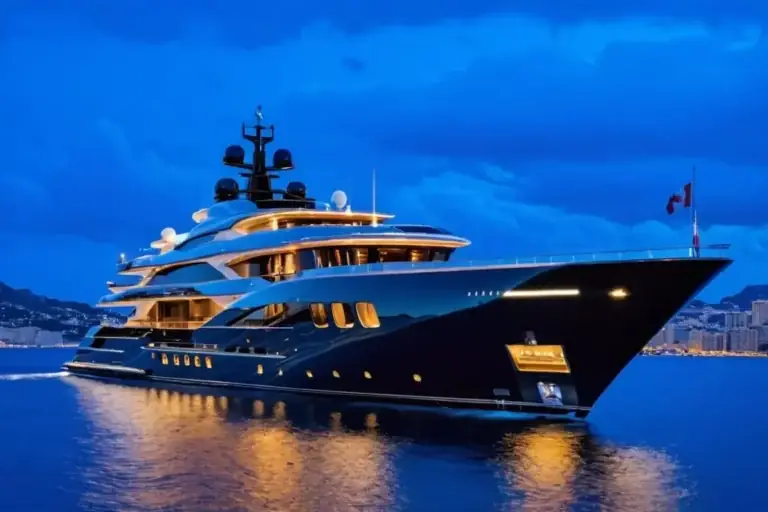
True comprehension of this domain necessitates analyzing how distinct vessel configurations shape monetary and experiential outcomes. Evaluating a high-volume tri-deck motor yacht highlights extensive interior volume and multi-level deck spaces offset by high daily fuel consumption and deep drafts that restrict entry into shallow coves, whereas evaluating a performance sailing catamaran emphasizes shallow draft capabilities and fuel-efficient cruising offset by reduced interior deck space and sensitive heel angles during heavy weather. When planners investigate structural alternatives, they require an analytical framework weighing absolute interior volume against maneuverability and operational autonomy.
Deep Contextual Background
The historical evolution of high-end maritime leisure reflects a profound transition from nineteenth-century royal steam yachts and private industrialist schooners toward highly regulated, globally mobile commercial charter fleets and private floating estates. Throughout the industrial era, large private vessels were primarily instruments of statecraft or expressions of unchecked corporate wealth, supported by rudimentary navigation tools and minimal international safety harmonization.
A structural transformation occurred with the post-World War II proliferation of fiberglass and lightweight steel manufacturing, followed decades later by the establishment of the Maritime Labour Convention (MLC) and rigorous International Safety Management (ISM) codes. Concurrently, the rise of professional yacht management firms and standardized charter contracts transformed vessel operations into sophisticated corporate logistics enterprises. In the contemporary era, navigating this landscape requires strict analytical review of changing environmental emission standards, sulphur cap regulations, territorial tax shifts in European cruising grounds, and an understanding of how shifting global wealth demographics alter long-term asset valuations in the global brokerage market.
Conceptual Frameworks and Mental Models
Navigating and executing optimal strategies for selecting high-yield maritime assets requires rigorous mental models that synthesize spatial autonomy, hydrodynamic efficiency, and operational risk mitigation.
1. The Volume-to-Draft Efficiency Index
This framework evaluates marine vessels by measuring interior gross tonnage against hull draft—ranking vessels with shallow drafts and high internal volume as prime targets for island cruising and shallow harbor access, while deep-draft displacement vessels sit at the opposite end of littoral flexibility.
2. The Crew-to-Guest Synergy Vector
This mental model analyzes the operational and interpersonal friction of crewed charters, prioritizing vessels where specialized departments—such as culinary, engineering, and deck operations—maintain balanced ratios to ensure seamless service delivery.
3. The Autonomous Cruising Range Model
This operational model weighs a vessel’s fuel capacity, water maker output, and provisions storage against its geographic distance from primary supply ports, ensuring safety and self-sufficiency during remote ocean passages.
Key Categories or Variations of Marine Vessel Models
Categorizing the vast landscape of global watercraft requires grouping vessels by their structural architecture, propulsion systems, and operational profiles. Participants evaluate these categories based on their range capabilities and guest capacity.
-
Full-Displacement Motor Yachts: Heavy steel or aluminum hulls designed for stable, long-range cruising at economical displacement speeds. Trade-off: Exceptional structural stability and transoceanic range balanced by lower top speeds and high maintenance overhead.
-
Planing and Semi-Displacement Sportfishers: Lightweight, high-powered vessels engineered for rapid transit and offshore marine sports. Trade-off: High transit speeds and agile handling balanced by severe fuel consumption and reduced interior comfort in heavy seas.
-
Performance Cruising Catamarans: Dual-hull configurations offering expansive deck footprints, shallow drafts, and efficient sail-assisted propulsion. Trade-off: Incredible stability at anchor and deck space balanced by wide beam dimensions that complicate standard marina slip reservations.
-
Classic and Modern Sailing Sloops: Single-hull traditional sailing craft balancing aerodynamic sail power with auxiliary engine integration. Trade-off: Authentic maritime engagement and silent cruising balanced by physical heel angles and smaller interior living quarters.
-
Expedition and Explorer Vessels: Ice-strengthened, heavy-duty hulls engineered for high-latitude polar exploration and remote trans-oceanic voyages. Trade-off: Unmatched autonomy, structural safety, and global range balanced by industrial styling and higher acquisition or charter costs.
-
Classic Heritage Motor Yachts: Restored vintage vessels combining mid-century naval design aesthetics with modern mechanical refits. Trade-off: Distinctive historical character and visual elegance balanced by frequent mechanical oversight requirements and legacy system upkeep.
Comparison of Marine Vessel Categories
| Vessel Category | Primary Structural Mechanism | Typical Risk Profile | Primary Operational Vector |
| Full-Displacement Motor Yachts | Heavy displacement steel/aluminum hulls | Low-Moderate (mechanical complexity of multi-deck systems) | Executing long-range transoceanic cruising schedules |
| Performance Catamarans | Dual-hull multi-paneled platform | Low (shallow draft grounding risks in uncharted reefs) | Maximizing anchor stability and shallow bay access |
| Expedition Explorer Ships | Ice-classed structural steel plating | Moderate-High (remote medical evacuation, extreme weather) | Navigating high-latitude polar and remote island archipelagos |
| Classic Sailing Sloops | Monohull rigged with Bermuda or gaff sail plans | Moderate (rigging stress, crew physical coordination) | Combining auxiliary diesel power with silent wind propulsion |
Realistic Decision Logic
When participants evaluate potential marine itineraries and vessel classes, selection must be anchored in cruising geography, guest mobility, and weather expectations. If participants prioritize smooth interior living and stable multi-deck entertaining across calm Mediterranean bays, targeting high-volume displacement motor yachts yields optimal comfort. Conversely, if participants seek shallow reef access in remote tropical lagoons or efficient wind-powered transit, selecting performance catamarans or sailing sloops ensures authentic maritime immersion.
Detailed Real-World Scenarios and Operational Dynamics
To understand how different vessel classes perform under real-world operational conditions, consider four distinct scenarios.
Scenario A: The Shallow-Draft Island Navigation
A charter party navigates a shallow Bahamian bank system aboard a high-volume displacement motor yacht with a ten-foot draft.
-
Failure Mode: The vessel encounters unexpected shallow shoals, forcing a grounding risk or a mandatory wide detour that disrupts the daily island-hopping itinerary.
-
Second-Order Effect: The captain deploys a shallow-draft tender to scout passage markers ahead, prompting the charterer to prioritize catamaran platforms for future shallow-water itineraries.
Scenario B: The Mediterranean Meltemi Gale Encounter
A sailing yacht charter experiences an unexpected onset of the Meltemi wind while anchored in an exposed Aegean bay.
-
Failure Mode: High wind shear places intense stress on the anchor chain and rigging, creating dangerous rolling conditions and forcing an emergency relocation under engine power.
-
Second-Order Effect: The crew secures all deck furniture, initiates continuous anchor watch shifts, and alters the route to seek shelter in a protected municipal harbor.
Scenario C: The Advanced Provisioning Allowance Dispute
A charterer completes a one-week Mediterranean voyage and receives the final accounting statement for the Advanced Provisioning Allowance.
-
Failure Mode: Due to excessive consumption of rare vintage wines and high-cost imported provisions, the APA is completely depleted, requiring a supplemental cash settlement upon disembarkation.
-
Second-Order Effect: The charterer institutes a strict daily provisioning consumption cap and requests itemized preliminary cost breakdowns before future departures.
Scenario D: The Remote Mechanical Failure
An expedition yacht operating in a remote Chilean fjord suffers a primary generator failure far from urban repair facilities.
-
Failure Mode: Loss of primary hotel load power disrupts onboard refrigeration, water production, and stabilization systems, threatening guest comfort.
-
Second-Order Effect: The chief engineer switches immediately to the secondary emergency generator while coordinating remote parts delivery through local maritime agents.
Planning, Cost, and Resource Allocation
Mastering the selection and deployment of optimal maritime journeys requires allocating administrative attention to crew contracts, port fee schedules, fuel burn budgets, and insurance coverage.
Financial Dynamics and Cost Variability
| Planning Element | Estimated Resource Investment | Primary Cost Driver | Financial Risk / Value Impact |
| Charter Fee Base | Substantial weekly base rate paid to vessel owner | Vessel size, age, and builder reputation | Secures the physical asset and core crew structure |
| Advanced Provisioning (APA) | 25% to 35% surcharge over base charter rate | Fuel consumption, dockage fees, fine food and wine | Covers variable operating expenses during the voyage |
| Maritime Value-Added Tax | Regional tax percentages (ranging from 0% to 22%) | Territorial cruising waters and charter contract terms | Prevents unexpected tax liabilities upon contract signing |
| Crew Gratuity Reserve | 10% to 20% of base charter fee | Service quality and crew performance benchmarks | Ensures motivated onboard service delivery |
Opportunity Costs and Resource Allocation
A common administrative error in maritime planning involves focusing exclusively on the base charter fee while underestimating the compounding impact of local marina berthing fees, fuel repositioning charges, and territorial value-added taxes. Allocating administrative effort to reviewing tax-neutral cruising itineraries and fuel-efficient cruising speeds yields far greater budgetary control than negotiating minor discounts on the base charter rate. Optimizing resources requires treating variable marine expenses as core structural elements of the total financial commitment.
Tools, Strategies, and Support Systems
Successfully navigating the selection and execution of elite maritime workflows requires utilizing specialized electronic chart systems, yacht management software, charter brokerage networks, and meteorological routing tools.
-
Electronic Chart Display and Information Systems (ECDIS): Advanced digital navigation software tracking real-time bathymetry, shipping lanes, and navigational hazards.
-
Global Marine Meteorological Routing Platforms: Professional weather forecasting software modeling wind, wave heights, and current vectors for voyage planning.
-
Yacht Brokerage Central Agency Databases: Vested industry networks tracking worldwide charter availability, vessel specifications, and central agency listings.
-
Onboard Inventory and Provisioning Management Apps: Digital ledgers tracking galley stores, fuel reserves, and equipment maintenance intervals.
-
Maritime Satellite Communication Terminals: High-bandwidth marine broadband systems maintaining continuous off-grid internet and operational connectivity.
-
Secure Escrow and Contract Platforms: Legal financial systems managing secure client fund deposits, charter agreements, and MYBA contract compliance.
Risk Landscape and Failure Modes
Navigating global maritime travel strategies introduces specific operational risks and compounding hazards that require proactive mitigation.
Compounding Risks in Marine Itinerary Planning
-
Regulatory Flag and Compliance Failures: Facing port detention or cruising bans due to non-compliance with local maritime safety laws or crew certification mandates.
-
Severe Weather Trapping: Experiencing sudden tropical storms or intense regional gales that lock vessels in port or compromise offshore passage safety.
-
Supply Chain and Logistics Breakdowns: Suffering severe provisioning delays or lack of specialized mechanical parts when cruising in remote developing regions.
-
Crew Chemistry Friction: Encountering operational breakdowns or guest dissatisfaction due to interpersonal friction among the hired crew complement.
Governance, Maintenance, and Long-Term Adaptation
Preserving maritime safety standards, updating vessel portfolios, and maintaining organizational vigilance across multiple annual voyages requires adherence to structured review cycles and continuous planning audits.
Monitoring and Review Cycles
Participants must audit regional maritime law updates quarterly, review vessel safety management certificates semi-annually, track global fuel price volatility continuously, and conduct comprehensive post-voyage debriefs to evaluate operational efficiency.
Layered Maintenance Checklist
-
Pre-Charter Contract Audit: Verify MYBA terms, applicable value-added tax rates, and exact Advanced Provisioning Allowance rules.
-
Safety Equipment Inspection: Check life rafts, EPIRBs, fire suppression systems, and personal flotation devices before departure.
-
Weather Routing Plan Review: Confirm alternate safe harbors along the planned itinerary in case of sudden weather deterioration.
-
Crew Credential Verification: Validate STCW certifications, captain licenses, and engineering qualifications for all assigned crew members.
Measurement, Tracking, and Evaluation
Assessing the success of a maritime journey requires balancing quantitative mechanical metrics with qualitative guest satisfaction signals.
-
Quantitative Indicators: Zero safety incidents or port citations, fuel consumption matching projected engineering models, and final APA accounting balancing within expected margins.
-
Qualitative Signals: Absolute guest comfort during rough weather transits, seamless culinary and deck service execution, and high morale across the onboard crew.
-
Documentation Standards: Maintaining comprehensive digital logs recording voyage routes, fuel burn rates, maintenance intervals, weather logs, and operational lessons learned.
Common Misconceptions and Oversimplifications
-
Myth: Renting a fully crewed luxury yacht means the charterer has zero responsibilities regarding vessel operations or itinerary changes.
-
Correction: While the captain manages operational safety and navigation, charterers must collaborate closely with the crew to adjust itineraries based on real-time weather and local port rules.
-
-
Myth: The Advanced Provisioning Allowance is a fixed fee that guarantees all food and drink expenses are fully covered regardless of consumption.
-
Correction: The APA is an operating deposit; any unspent funds are refunded at the end of the trip, but excessive consumption of luxury goods will quickly exhaust the deposit, requiring additional payments.
-
-
Myth: Sailing vessels and catamarans are immune to high fuel costs because they rely primarily on wind power.
-
Correction: Modern charter itineraries require precise schedule adherence, meaning auxiliary engines are frequently run during calm weather and tight port-entry windows, consuming significant fuel.
-
-
Myth: Cruising waters in the Mediterranean and Caribbean operate under uniform tax laws and customs regulations.
-
Correction: Each country enforces distinct maritime value-added taxes, temporary importation rules, and customs clearance procedures that change frequently.
-
-
Myth: Any licensed captain is qualified to operate any vessel class regardless of its size, propulsion type, or tonnage rating.
-
Correction: Captains hold specific tonnage and propulsion endorsements (such as Master 3000 GT or sail endorsements) that legally limit the size and type of vessel they may command.
-
-
Myth: Booking a yacht charter at the last minute during peak season guarantees heavily discounted rates due to unsold inventory.
-
Correction: Peak season high-demand vessels sell out months in advance, and last-minute availability is typically restricted to lower-tier or poorly maintained craft.
-
Ethical, Practical, or Contextual Considerations
The broader systemic implications of consumer leisure cruising touch upon marine environmental protection, coral reef conservation, coastal labor standards, and local harbor infrastructure capacity. When travelers deploy large vessels across fragile marine ecosystems, they interact with delicate habitats where anchoring rules, greywater discharge restrictions, and wildlife disturbance guidelines require strict adherence. Understanding these structural dynamics allows participants to manage their journeys with sober realism, recognizing that every maritime voyage relies on fragile coastal infrastructures and dedicated professional crews. Maintaining environmental stewardship alongside strict navigational discipline defines the modern standard of sophisticated marine travel management.
Conclusion
The strategic planning, financial analysis, and operational discipline required when evaluating alternatives represent the intersection of naval architecture, international law, and personal leisure fulfillment. By moving past marketing assumptions and confronting the operational realities of vessel draft limits, Advanced Provisioning Allowance accounting, weather routing, and regulatory compliance, participants can establish a structural framework guaranteeing absolute value retention and personal safety. Whether evaluating displacement motor yachts, performance catamarans, or expedition vessels, achieving total mastery when you compare yachting options demands an unyielding commitment to analytical precision, active resource governance, and intellectual honesty.